Takes a read
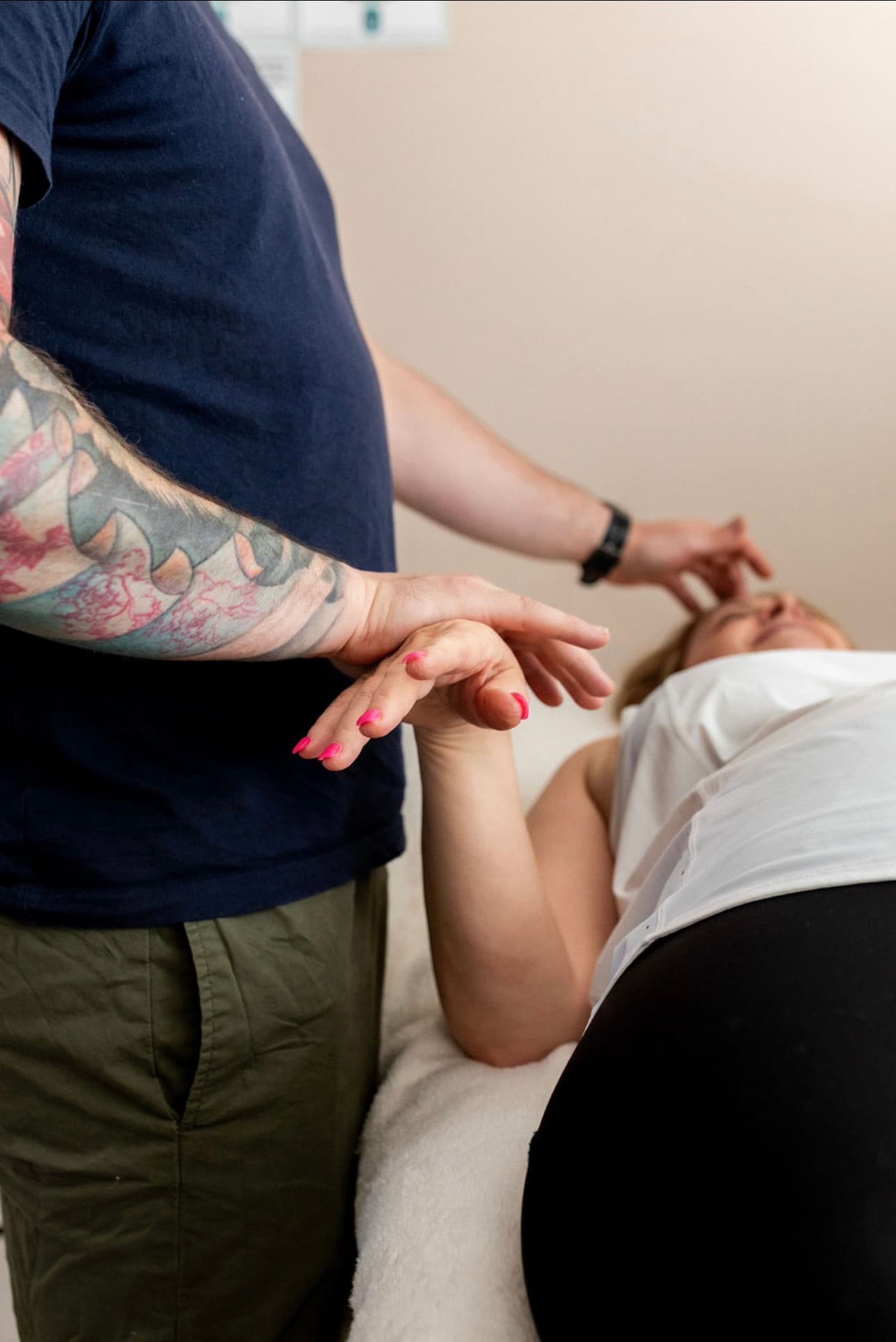
You name what you want to work on. From there a kinesiologist uses muscle monitoring to read how your nervous system is responding, rather than working from a script or a symptom checklist.
Strip away the mystery and it is a simple job: read the body, then help it settle. Here is what a kinesiologist actually does, the tools they use, and what happens once you are on the table.

The Short Answer, Then The Detail
A kinesiologist reads your body with muscle monitoring, then works with what it shows to help stored stress settle. A read, then a release. Everything else on this page is detail, because “reads your body” is the part that sounds vague until you see what it means.
This page is about the person and the session, what a kinesiologist does when you are in front of them. If you came looking for the different branches of kinesiology, applied, holistic, PKP, that is a separate map, and the types of kinesiology guide lays it out. New to the whole idea? Start with what kinesiology is, in plain English. For the muscle test itself, the muscle testing page goes deeper than we will here.
The Short Version
The one-line answer
A kinesiologist uses muscle monitoring as a feedback signal to read how your nervous system is responding.Then gentle techniques help the stress your body is holding settle, no diagnosis, no prescriptions.A read, then a release, guided by your body.
The tool
Light pressure on a muscle, used as a feedback signal.Not a strength test, and not a medical diagnostic.It points to where stress is sitting.
The lane
Works alongside your GP and psychologist, never instead of them.Doesn’t diagnose or treat conditions.Complementary and unregistered in Australia.
What The Role Involves
Takes a read of how your nervous system is responding, works with the body’s stress response rather than the story behind it, follows what surfaces instead of a protocol, and stays out of diagnosis and prescribing entirely.
You name what you want to work on. From there a kinesiologist uses muscle monitoring to read how your nervous system is responding, rather than working from a script or a symptom checklist.
The focus is the body’s stress response: the wired-but-tired, braced-for-nothing patterns. The work is about helping an over-revved system drop back down and settle, not talking through the story behind it.
There is no fixed protocol. The session goes where your body points, using gentle techniques like acupressure, holding points, movement or breath, at the pace you set rather than one the practitioner forces.
A kinesiologist does not diagnose, prescribe, or treat medical or psychological conditions. Good practice is to work alongside your GP and psychologist and keep them in the loop, never to replace them.
The nervous-system focus is the whole point of the work, and it is covered properly on the nervous system regulation page.
Kinesiologist, Psychologist, Or GP
If anything might be medical, or nothing has been checked yet, the GP goes first. If a diagnosed mental health condition is in the picture, that is a psychologist’s job. A kinesiologist sits alongside both, for body-held stress that talking has not shifted.
| Who | Registration | What they do | When to see them |
|---|---|---|---|
| GP | Registered medical practitioner | Assesses, diagnoses, prescribes, refers, rules out physical causes | First, whenever something might be medical, or nothing has been checked yet |
| Psychologist | AHPRA-registered health practitioner | Diagnoses and treats mental health conditions with evidence-based therapy | When a diagnosed condition is in the picture, or a GP has referred you |
| Kinesiologist | Unregistered complementary practitioner | Reads the body with muscle monitoring and works with stored stress. No diagnosis, no prescriptions | Alongside the above, for body-held stress that talking has not shifted |
The registration column is the load-bearing one. GPs and psychologists are regulated by AHPRA. Kinesiology is not a registered health profession in Australia, so no regulator sets the standard, which is exactly why a kinesiologist should never be the appointment that replaces one of the other two. For the longer version, read kinesiologist vs psychologist.
Already have the medical side covered and want the body-based part? Book a session with me, in Moorabbin or online across Australia.
What Happens In A Session
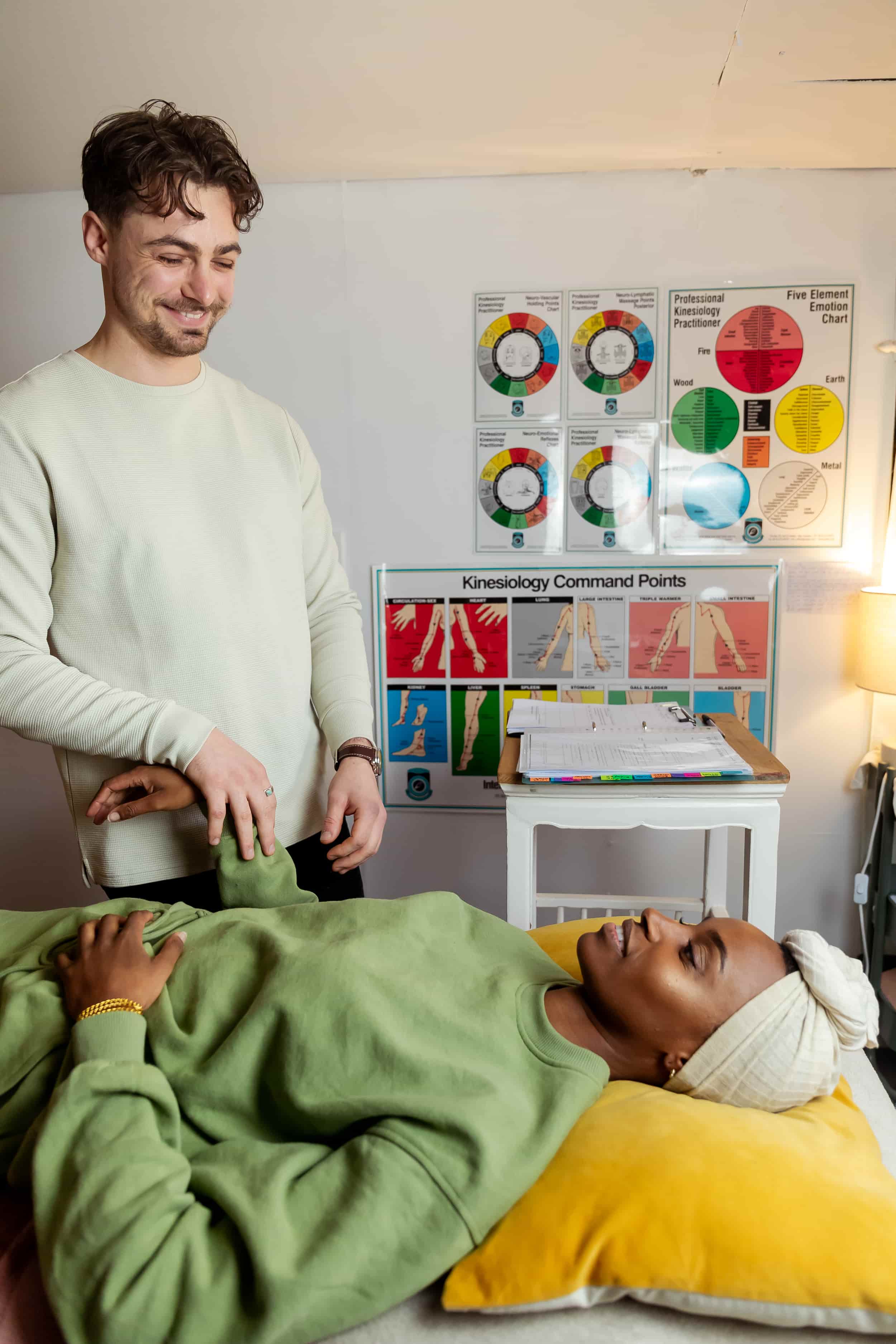
Nothing is relived, and nothing needs to be talked through.You stay fully clothed on a padded table, and the session is calm and structured from start to finish.The through-line is muscle monitoring, the feedback tool a kinesiologist uses to read what your body is holding.
A short conversation about what you want to work on.You set the goal, you don’t have to explain the whole backstory.
Gentle muscle monitoring reads where your nervous system is holding stress.Light pressure, held positions, no force.
Targeted techniques help your body let the pattern go.Then a kinesiologist shapes what to carry into the days after. Results vary.
Who You’d See
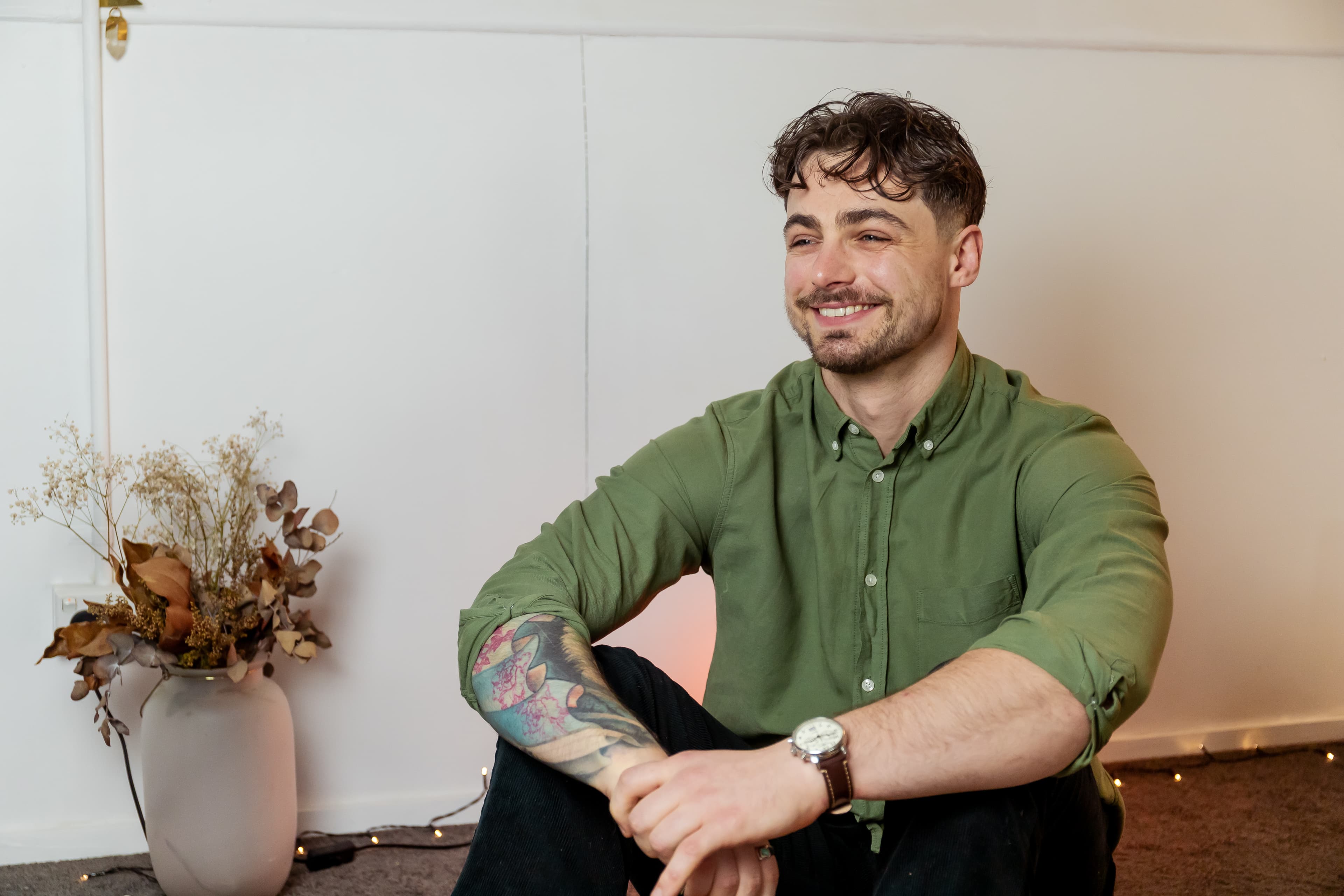
Yes, more than the branch does. The tools are the same across practitioners and the read is not. I practise PKP, trauma-informed, and I follow what your body shows me rather than a script, at the pace your nervous system sets.
Plenty of people arrive with no idea what to expect. Andrew had never heard of kinesiology before we met, and wrote in his Google review: “From our very first session, he made me feel completely comfortable and safe.” Others just want the process to be thorough. Giuliano put it this way in his Google review: “He was knowledgeable, caring and thorough in his questioning and getting to the root of the goal we worked on and then doing the session.”
Still not sure it is what you need? That is exactly what a first conversation is for. Read my story, or book a free clarity call below.
Frequently Asked Questions
A kinesiologist uses gentle muscle monitoring as a feedback tool to read how your nervous system is responding, then works with your body to help stored stress settle. It is hands-on and body-led rather than talk-based. I’m Vildan Alihodzic, and I practise Professional Kinesiology Practice (PKP) at Intelligentle Healing in Moorabbin, Melbourne, working with stress, burnout, anxiety and stuck patterns. A kinesiologist does not diagnose or treat medical conditions; kinesiology is a complementary practice and not a substitute for medical advice. Results vary.
You start with a short conversation about what you want to work on, then lie fully clothed on a padded table. The kinesiologist uses light muscle monitoring to read where your body is holding stress, and works with gentle techniques from there. Nothing needs to be relived or talked through, and there is no force involved. A first session at Intelligentle Healing runs 75 minutes and follow-ups are 60. Most people leave noticing a shift, though results vary.
People most often see a kinesiologist for stress, burnout, anxiety that sits in the body, and nervous-system patterns that have not shifted through talking or willpower alone. The work supports your own capacity to settle rather than treating a diagnosed condition. A kinesiologist offers a complement to medical and psychological care, alongside your GP or psychologist, never instead of them.
No. A kinesiologist is not a doctor, psychologist or registered health practitioner, and cannot diagnose or treat medical or psychological conditions. Muscle monitoring is a feedback tool, not a medical diagnostic test. If you want a diagnosis or clinical treatment, that is a job for your GP or a psychologist. For how the two roles sit next to each other, see the kinesiologist vs psychologist guide.
Kinesiology is not a registered health profession in Australia, so it is not regulated by AHPRA and there is no single legal standard. Practitioners train through colleges and modality-specific programmes, and many belong to a professional association. I trained in Professional Kinesiology Practice (PKP) and work trauma-informed. Because the field is unregulated, it is worth checking any practitioner’s training and association membership before you book.
This page is about the practitioner and the session, what a kinesiologist actually does when you are on the table. The types of kinesiology are the different branches of the practice, from applied to holistic to PKP, which is a separate question. If you are trying to work out which branch you need, the types of kinesiology guide maps them out.
The honest way to find out is one session. I practise PKP kinesiology in Moorabbin, with online sessions across Melbourne, and give a straight read on whether the work suits you.
Kinesiology is a complementary health practice and is not a registered health profession in Australia. Sessions are not a substitute for medical advice or treatment.