Kinesiologist vs psychologist: who to see
They get compared, but they are not two versions of the same thing. One is registered clinical care, the other is a complementary, body-based practice. Here is the honest read on which to see, for burnout, stress or anxiety, and when the answer is both.
What Each One Is
Two different jobs
A psychologist is a registered health practitioner. They complete a university degree and supervised training, and they are registered and regulated through AHPRA by the Psychology Board of Australia. That registration is the point: a psychologist is qualified to assess, diagnose and treat mental health conditions, using evidence-based talking therapies like CBT.
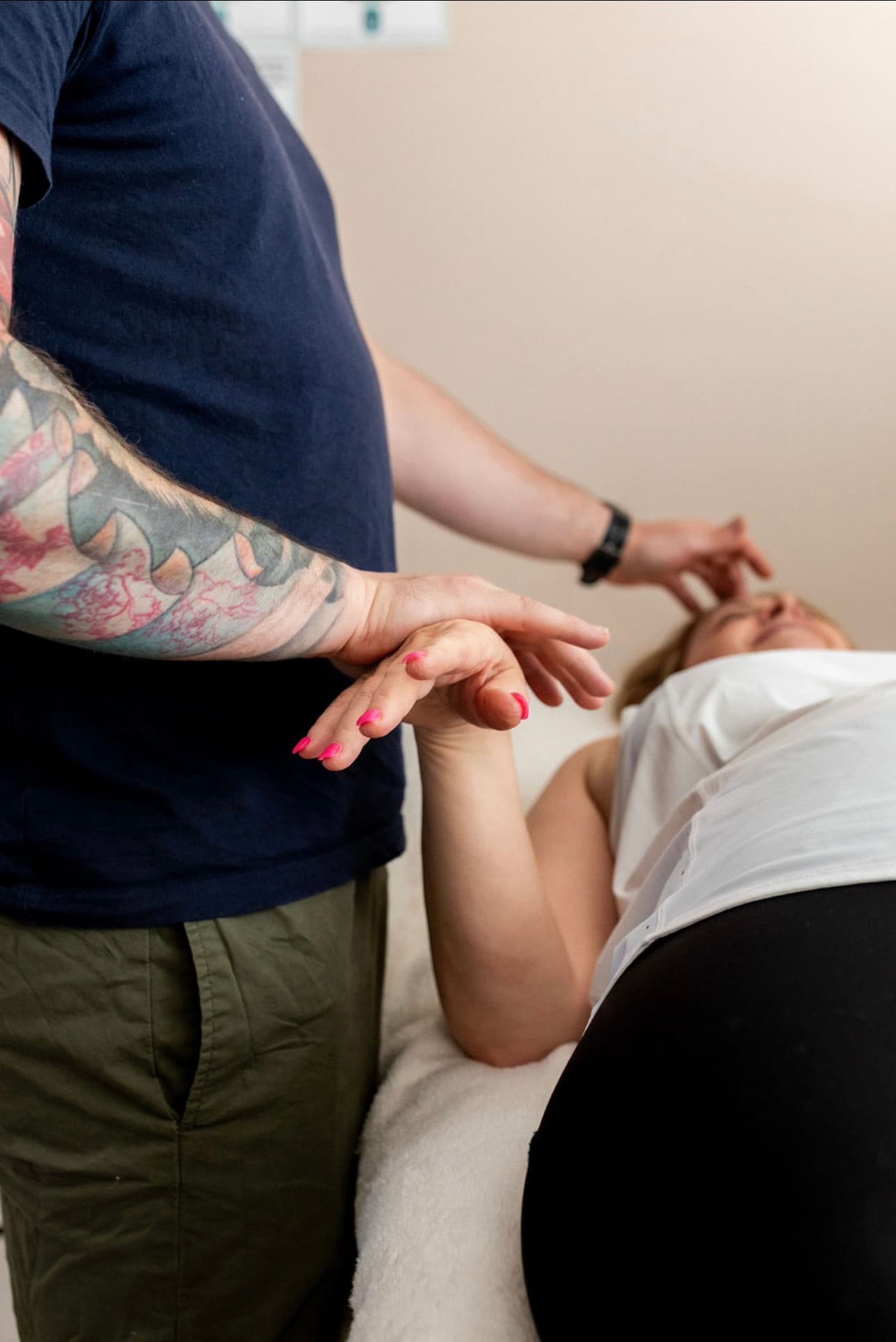
A kinesiologist works differently and sits in a different category. As the Victorian Government’s Better Health Channel describes it, kinesiology uses muscle monitoring, a form of biofeedback, to look at where stress and imbalance sit in the body. It is a complementary practice, not a registered profession, so a kinesiologist does not diagnose or treat conditions. The branch practised at Intelligentle Healing, PKP, works with the nervous system and stored stress.
So one is clinical care with a legal scope to diagnose and treat. The other is a body-based complement that reads the nervous system and helps it settle. Same broad goal of feeling better, very different jobs.

Side by Side
The quick comparison
The same dimensions read across both. This is not a contest, the two roles are built for different things.
The Short Version
Clinical care, or a body-based complement
The core difference
One can diagnose, one can’t
A psychologist is registered to assess, diagnose and treat mental health conditions.A kinesiologist works with the body and nervous system, and does none of those things.That single difference decides who to see first.
The approach
Mind, or body
A psychologist works through conversation and structured therapy.A kinesiologist works through the body, using muscle monitoring.
Choosing
Not either/or
Diagnosis, risk or crisis? Psychologist or GP first.Body-held stress alongside that care? Kinesiology can help.Plenty of people use both.Complementary, not medical, and results vary.
Who to See for Burnout, Stress or Anxiety
Start with the clinical question
The honest first filter is not “which do I prefer”, it is “is this clinical”. If your burnout, stress or anxiety comes with a diagnosable condition like depression or an anxiety disorder, if you are struggling to function, or if you ever feel unsafe, a psychologist or your GP is the right first call. That is what registered clinical care is for, and a kinesiologist is not a substitute for it. If you are in crisis, contact your GP, or call Lifeline on 13 11 14.
Where kinesiology fits is the body-based side of the same problem. Plenty of people understand their stress perfectly, they have done the talking and the reading, and it is still sitting in the body: the 3am wired loop, the braced-for-nothing tension, the dysregulated nervous system that will not stand down. That is the territory a kinesiology session works with, and it often sits well alongside psychological care rather than instead of it.
A client I worked with, Priya, put that overlap plainly in her Google review: “As someone who’d tried everything for anxiety (therapy, medication, meditation), kinesiology with Vildan was the missing piece. He works at a level nothing else had reached.” She kept her other support in place, and the body-based work added to it.
So the practical answer to “who should I see for burnout, a psychologist or a kinesiologist?” is usually: the psychologist or GP leads on anything clinical, and kinesiology for burnout can support the nervous-system side. If it is more the anxious, wired feeling you are after help with, kinesiology for anxiety works the same way, alongside your psychologist, never in place of them.
How to Choose
A few honest filters
- Is it clinical? If you might have a diagnosable condition, are struggling to function, or feel unsafe, see a psychologist or GP first. Diagnosis and treatment are their job, not a kinesiologist’s.
- Mind, or body? If the work you need is talking it through and building strategies, that is psychology. If you have understood it and it is still stuck in the body, that is where kinesiology works.
- Do you want a rebate? Psychology sessions can be partly Medicare-rebated with a GP mental health treatment plan. Kinesiology is generally a private fee.
- Could it be both? Often the strongest option is a psychologist for the clinical work and kinesiology alongside for the nervous-system side. They are not mutually exclusive.
An Honest Word on the Evidence
Different scopes, different evidence
It would be dishonest to put these on an even footing. Psychology has a strong, established evidence base for many conditions, and psychologists are trained and regulated to deliver it. Kinesiology does not have that. The Victorian Government’s Better Health Channel is candid that there is little high-quality evidence for the underlying philosophy and claims of kinesiology, which is exactly why it belongs in the complementary category rather than the clinical one.
None of that makes a kinesiology session pointless. It means being clear about what it is: a supportive, body-based complement that many people find helpful for stress held in the body, not a treatment for a diagnosed condition. Because the field is unregulated, the Better Health Channel also notes that complementary therapists are not required by law to hold conventional medical qualifications, so checking a practitioner’s training and association membership matters. Keep your GP and psychologist in the loop for any health concern, and results vary from person to person.
Frequently Asked Questions
Common questions about kinesiologists and psychologists
What is the difference between a kinesiologist and a psychologist?
A psychologist is a university-trained, AHPRA-registered clinician who assesses, diagnoses and treats mental health conditions using evidence-based talking therapies. A kinesiologist is a complementary practitioner who uses gentle muscle monitoring to read the nervous system and work with stress the body is holding, and cannot diagnose or treat conditions. They do different jobs: one is clinical care, the other is a body-based complement to it. I’m Vildan Alihodzic, and I practise PKP Kinesiology at Intelligentle Healing in Moorabbin, not psychology.
Should I see a psychologist or a kinesiologist for burnout?
If burnout comes with a diagnosable condition like depression or an anxiety disorder, or you are struggling to function or feeling unsafe, a psychologist or your GP is the right first call. A kinesiologist works well alongside that care for the physical, wired-but-tired side of burnout, the stress your body keeps holding after you understand it. Many people use both. A kinesiologist is a complement to psychological care, never a replacement, and results vary.
Can a kinesiologist diagnose or treat anxiety or depression?
No. Only a registered practitioner such as a psychologist, psychiatrist or GP can diagnose or treat anxiety, depression or any clinical condition. A kinesiologist does not diagnose, does not prescribe, and does not treat conditions. At Intelligentle Healing the work supports your nervous system alongside your medical and psychological care, and if you are seeing a psychologist or taking medication, keep going and keep them in the loop.
Can I see both a kinesiologist and a psychologist?
Yes, and many people do. The two are not mutually exclusive: a psychologist works through the mind and the spoken narrative, while a kinesiologist works through the body and the nervous system. They can run side by side, with the psychologist leading any clinical care. Keep your GP and psychologist informed so everyone is working from the same picture.
Is a kinesiologist cheaper than a psychologist, and are sessions rebatable?
It depends. Psychology sessions can attract a Medicare rebate with a GP mental health treatment plan, which brings the out-of-pocket cost down for up to 10 sessions a year. Kinesiology is generally a private fee with no Medicare rebate, and since the 2019 private-health reforms it is usually not claimable on extras cover either. Check directly with your health fund before booking. Intelligentle Healing does not promise coverage.
Which is better for stress, a kinesiologist or a psychologist?
Neither is objectively better, and it depends on the stress. If stress is tipping into a clinical problem, a psychologist is the evidence-based choice. If you have done the talking and understand your stress but it is still sitting in your body, a body-based kinesiology session can be a useful complement. The honest answer is that they suit different needs, and often work best together. Results vary.
Sources
- Psychology Board of Australia — registration and regulation of psychologists (AHPRA) (psychologyboard.gov.au)
- Mental health treatment plan and Medicare rebates (Healthdirect) (healthdirect.gov.au)
- Kinesiology (Better Health Channel, Victoria) (betterhealth.vic.gov.au)
- Complementary therapies, choosing a practitioner (Better Health Channel, Victoria) (betterhealth.vic.gov.au)

The Kinesiology Side
If the body-based side is the one you’re missing
If you already have the clinical side covered, or you have done the talking and the stress is still living in your body, that is where this work comes in. I practise PKP, trauma-informed, in Moorabbin and online across Australia, alongside your medical and psychological care, never in place of it.
Not sure whether it is the right fit? That is what a first conversation is for. Read my story, or book a free clarity call below.

Think the body-based side would help?
If the nervous-system side of stress or burnout is what you are looking to work with, alongside your other care, the simplest next step is a conversation. I practise PKP kinesiology in Moorabbin, with online sessions across Melbourne.
Kinesiology is a complementary health practice and is not a registered health profession in Australia. Sessions are not a substitute for medical advice or treatment.