Nervous System Regulation
Nervous system regulation in Melbourne
Nervous system regulation is your body’s ability to move out of stress and back to a steady baseline. When that stops happening on its own, willpower stops helping, because the pattern lives in the body. At Intelligentle Healing in Moorabbin, I use gentle muscle monitoring to find where the stress response is held and help it settle.
Page reviewed and updated 16 August 2026
What is nervous system regulation?
Nervous system regulation is your body moving between stress and rest as the situation demands: alert when something needs you, settled when it passes. A regulated system switches on, deals with the thing, then stands down. A dysregulated one stays braced.
Your autonomic nervous system runs on an accelerator and a brake. The accelerator is fight-or-flight, and it is meant to fire in bursts. The brake is rest-and-digest, and it is meant to bring you back down after. Months or years of sustained pressure teach the accelerator to stay half-pressed, and the brake gets sticky. That is survival mode: not a mindset problem, a body state.
At Intelligentle Healing in Moorabbin, Melbourne, this is the centre of every kinesiology session I run. If the practice itself is new to you, what kinesiology is covers it in plain English.
What does a dysregulated nervous system feel like?
Dysregulation rarely shows up as one symptom. It shows up as a way of living that has quietly become normal: exhausted but unable to switch off, braced for a threat that is not there, or numb and going through the motions.
These are the four patterns clients describe most when they first arrive at the Moorabbin clinic, and where to read about each one in depth on the blog.
| The pattern | What it feels like day to day | Read more |
|---|---|---|
| Wired but tired | Exhausted to the bone, then your head hits the pillow and your mind floods. Rest stopped recharging you. | How to reset a stuck system |
| Waking at 3am | Asleep in seconds, awake at 3am with a racing mind, staring at the ceiling until the alarm. | Why you wake at 3am |
| Switched on, can’t switch off | A low hum of urgency that never fully drops. You handle everything, and your body stays braced even when nothing is wrong. | High-functioning anxiety |
| Shut down and flat | Numb, detached, going through the motions. Not sad exactly, just absent from your own life. The other end of the same dysregulation. | Gentle somatic exercises |
If several rows read like your average Tuesday, the full picture is in what a dysregulated nervous system really is. None of these patterns mean anything is broken. They mean your system has adapted to a load it was never meant to carry this long. Persistent symptoms are still worth raising with your GP first, so anything medical can be ruled out.
Can you regulate your nervous system yourself?
Yes, up to a point. Daily practices like slow breathing, morning light, walking and long exhales genuinely help a stressed system settle, and they are free. Where they tend to stall is on load your body has carried for years, the kind that keeps pulling you back to the same braced baseline no matter how well you breathe.
| Approach | What it’s good at | Where it stalls |
|---|---|---|
| Daily self-regulation (breath, light, movement, sleep) | Maintenance. Taking the edge off a stressed system, day after day, at no cost. | Long-held patterns that reset back to braced by the next morning. |
| Guided kinesiology sessions | Finding where the load is held, using muscle monitoring, and working with it at the pace your body sets. | It is complementary work, so persistent or worrying symptoms still belong with your GP first. |
The two work together: the daily tools are the maintenance, the sessions are the reset. My practical toolkit of nervous system regulation exercises covers the daily practices, sorted by the state you are in, and breathwork for nervous system regulation goes deep on the fastest lever. Sessions are where the longer-held patterns get addressed, and your GP stays first in line for anything medical.
How Kinesiology Helps
How does kinesiology regulate the nervous system?
The nervous system does not respond to insight, it responds to safety.You can understand exactly why you are wired and still feel wired.PKP Kinesiology works at the level where the pattern lives, using muscle monitoring as a feedback tool to read what your body is holding and what it is ready to let go of.
Read
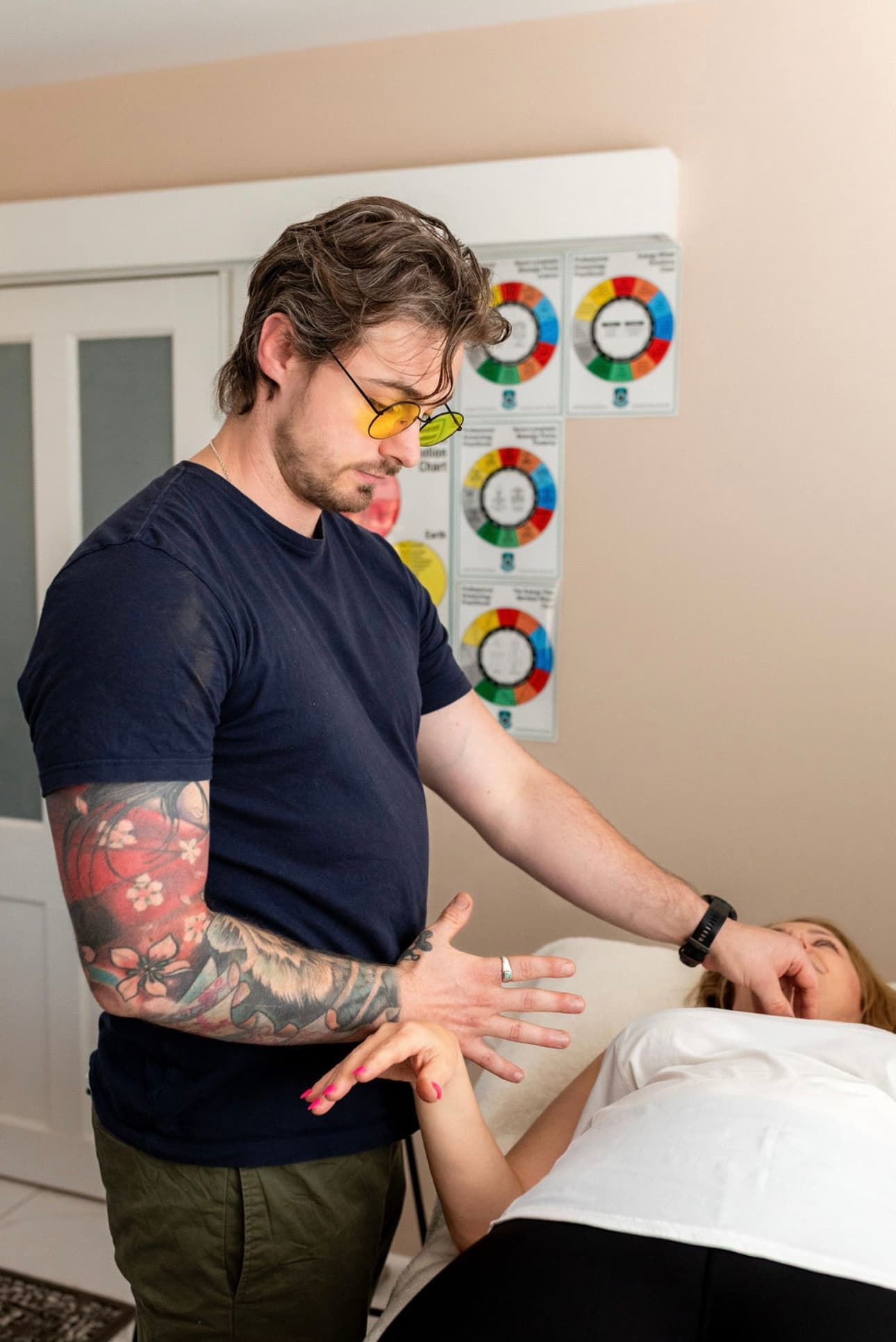
Gentle muscle monitoring reads where your nervous system is holding a stress response.You stay fully clothed on a padded table.
Rebalance
Targeted techniques help your body release the pattern it has been bracing around, so the fight-or-flight signal can stand down.
Recalibrate
Session by session, your baseline shifts toward safe and responsive instead of switched on.Deeper patterns take more sessions. Results vary.
Who This Is For
Built for people who look fine on the outside
This is for senior professionals and executives who are still performing while running on empty. You hold it together at work and at home, and underneath it your system never quite stands down. If you have tried everything else and still feel stuck in the same loop, that is the signal this work is built for.
- Burnout. Recovery is slower, focus is thinner, and the usual fixes have stopped working.
- Anxiety. A body braced for a threat that is not there, however calm the surface looks.
- Chronic stress. You understand your stress clearly, and understanding has not changed how you feel.
- High-functioning depletion. From the outside it looks like capacity. Inside, presence keeps slipping.
What happens in a session, and what does it cost?
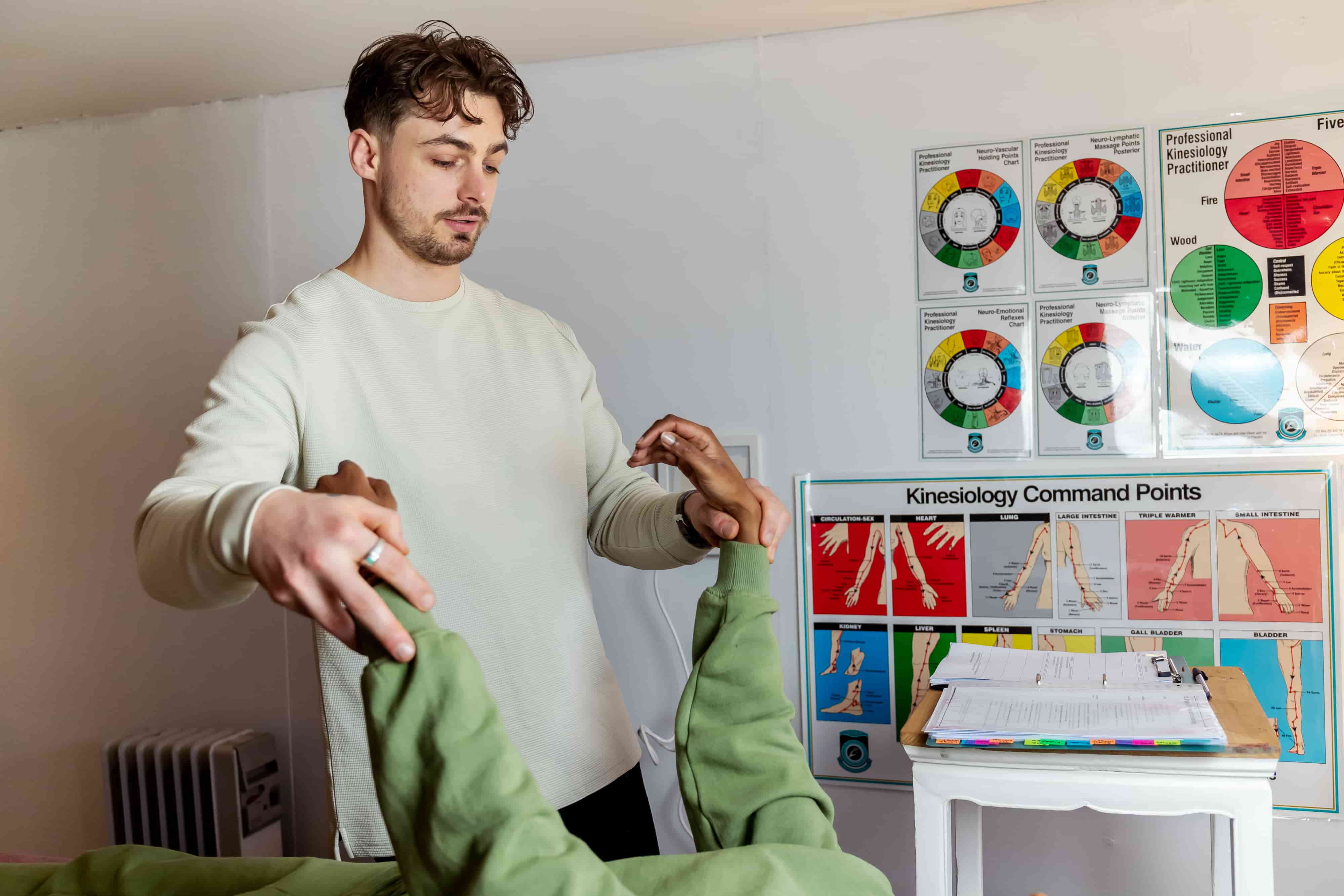
A first session runs 75 minutes and is $270 AUD: a brief history of what you want to address, then muscle monitoring to find where your nervous system is under the most load, fully clothed on a padded table. Follow-ups are 60 minutes and $220 AUD.
Current prices and what each session includes live on sessions and pricing, the one place they are kept up to date, and the full walkthrough is on what to expect in your first session. Nothing needs to be said out loud for the work to land.
Sessions run in person in Moorabbin or online across Australia. Most people start with four to eight sessions and reassess, and I give an honest read after the first one. Results vary.
VildanAlihodzic
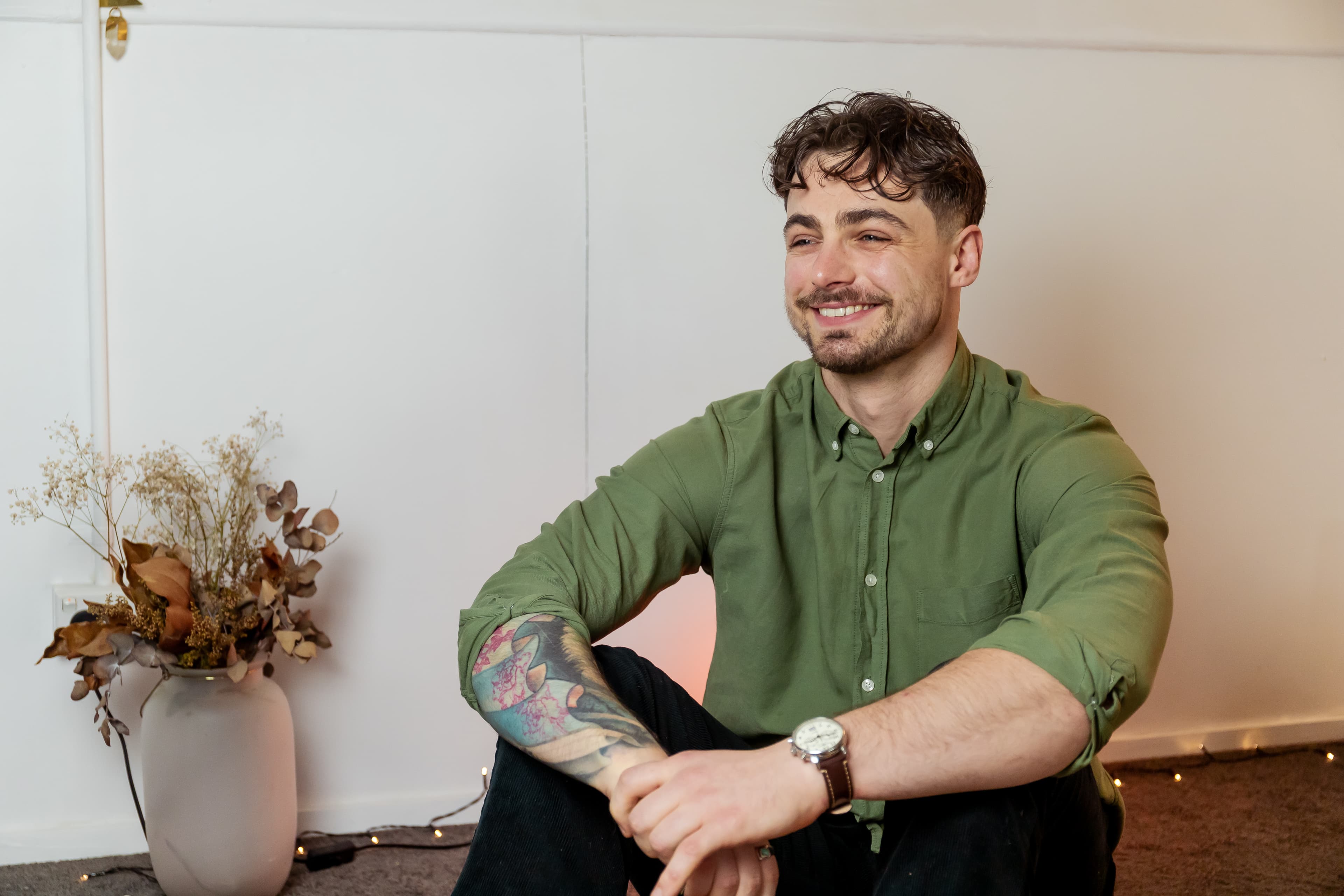
Trauma-informed PKP Kinesiologist. I work with executives and senior professionals across Bayside Melbourne who are running on accumulated stress nobody else can see. I do not follow a script, I follow what your body shows me.
The Intelligentle Method
A body-led process, three steps
The Intelligentle Method regulates your nervous system by working with your body, emotions and energy at the same time, instead of only talking about what is wrong. The shape is the same three steps every time, in the Moorabbin clinic or online. New to it? Read the full first-session walkthrough.
- 01
Book your first session
A focused 75 minutes to understand what you are carrying and how your body is holding it.
- 02
Map what your body holds
Muscle monitoring guides the work. We meet what your body shows us, at the pace it sets.
- 03
Build a new baseline
We shape the pathway forward so the change carries into how you live.
In person in Moorabbin or online across Australia.
Vildan is the best kinesiologist I have seen. He has help resolve my anxiety in both social situations and within my workplace. I am able to function in a much clearer capacity and I have Vildan to thank.
I felt comfortable diving into some deeper traumas and felt I was able to process them further while feeling safe and free of judgment. I definitely noticed an extra spring in my step and felt more upbeat in the days following the session.
He is a master at his craft, incredibly down to earth and highly intuitive. He listens and guides and creates a really safe space that you can explore yourself and what drives you. The session was powerful but light.
Vildan has an incredible ability to hold space without judgment. After just two sessions I noticed I was responding to stress differently, calmer, clearer, more grounded. Genuinely life-changing work.
I came in sceptical and left a believer. The session surfaced something I’d been carrying for years and just… moved it. I can’t fully explain it but I felt lighter for weeks afterwards.
As someone who’d tried everything for anxiety (therapy, medication, meditation), kinesiology with Vildan was the missing piece. He works at a level nothing else had reached.
Frequently Asked Questions
Common questions about nervous system regulation
Can kinesiology help with a dysregulated nervous system?
A dysregulated nervous system is one stuck in fight-or-flight or shutdown instead of moving freely between alert and rest. At Intelligentle Healing in Moorabbin, I use muscle monitoring to read where that stress response is held in the body, then work with gentle techniques to help it settle. Clients commonly report less reactivity, deeper sleep, and more capacity under pressure. Results vary. PKP Kinesiology is a complementary health modality and is not a substitute for medical advice.
Is kinesiology good for stress relief?
Stress relief is one of the most common reasons people come to Intelligentle Healing. Instead of managing stress at the level of thoughts, kinesiology works with the body, where the stress response lives. I’m Vildan Alihodzic, PKP Kinesiologist, and I use muscle monitoring to find where your system is carrying the most load and help it release. Many clients report leaving a session noticeably calmer, with the change building across a course of sessions. Results vary.
What is mind-body kinesiology?
Mind-body kinesiology sees the mind and body as one connected system rather than two separate problems. PKP Kinesiology reads the body for the physical imprint of stress and stored patterns, on the understanding that what the mind cannot resolve in words, the body often holds as tension. The work happens through the body, which is why it can shift things that talking alone has not. You may see this same body-based approach described as mind-body balancing or mind-body therapy; they point at the same work.
Can kinesiology help with emotional healing?
Many people come to kinesiology for emotional healing when they understand their patterns clearly but still feel stuck in them. Because PKP Kinesiology works with the nervous system directly, you do not need to retell or relive anything for the work to land. You set the theme, and muscle monitoring identifies what your body is ready to release. One gentle technique used within this work is emotional stress release, a light-touch method for taking the charge out of a stressful thought or memory. This is a complement to psychological therapy, not a replacement for it.
How is kinesiology different from talk therapy or psychology?
Talk therapy and psychology work largely through the mind and the verbal narrative, and they do that well. PKP Kinesiology works through the body. It reads the nervous system for stored stress and helps it down-regulate, with no requirement to talk anything through. It is a complement to talk therapy, psychology and medical care, never an alternative. If you are seeing a psychologist or GP, keep going. Intelligentle Healing is not an AHPRA-registered provider.
What does a nervous system regulation session involve?
A first session at Intelligentle Healing in Moorabbin runs 75 minutes. I take a brief history of what you want to address, then use muscle monitoring to identify where your nervous system is under the most load. You lie fully clothed on a padded table. Sessions are calm and structured, and nothing needs to be verbalised. Most people leave noticing a shift. Follow-up sessions are 60 minutes and build on what is already in motion.
How much does a nervous system regulation session cost?
An initial consultation at Intelligentle Healing is 75 minutes and $270 AUD. Follow-up sessions are 60 minutes and $220 AUD, in person in Moorabbin or online across Australia. Kinesiology is not covered by Medicare, and since 2019 it has not been eligible for private health insurance rebates in Australia, so the price you see is the full price.
How many sessions before my nervous system feels calmer?
There is no fixed number. Many clients notice a shift in their first session, and longer-held patterns such as chronic burnout or stored stress typically take more. Most people start with four to eight sessions and reassess from there. I give an honest read after your first session, so a single initial session is enough to tell whether the work is right for you. Results vary.
Kinesiology is a complementary health practice and is not a registered health profession in Australia. Sessions are not a substitute for medical advice or treatment.