The 3am wired loop
You are exhausted, then your head hits the pillow and your chest tightens and your mind starts cycling. Tired in your bones, wired in your body, and rest stopped switching the alarm off.
Kinesiology for Anxiety
For the anxiety that does not have an obvious cause, the kind that sits in the body and will not settle. When you have tried the thinking-based fixes and it is still there, the next move is not more willpower. It is in the body.

What Body-Held Anxiety Feels Like
Anxiety is meant to spike at a real threat, then settle once it passes. Body-held anxiety is what happens when the alarm keeps ringing with nothing to point at. It rarely arrives as one tidy symptom. It shows up in the body and in the small hours. Three versions people describe most.
You are exhausted, then your head hits the pillow and your chest tightens and your mind starts cycling. Tired in your bones, wired in your body, and rest stopped switching the alarm off.
Nothing is wrong on paper. The job is fine, the family is fine, and your body is still braced for a threat it cannot name. The not-knowing why becomes its own kind of dread.
Breathwork, the apps, the books, maybe the talking. You understand your anxiety better than ever, and it is still sitting in your body. Insight did not move it because it was never living in your thoughts.
Who This Is For
This is for people whose anxiety lives in the body, not in a single fixable worry. You have done the reading and maybe the talking, you understand your anxiety clearly, and it is still there in your chest and at 3am. Often the wired-but-tired loop is a dysregulated nervous system, not a flaw in you. If insight has not moved it, that is the signal this work is built for.
How Body-Based Kinesiology Helps
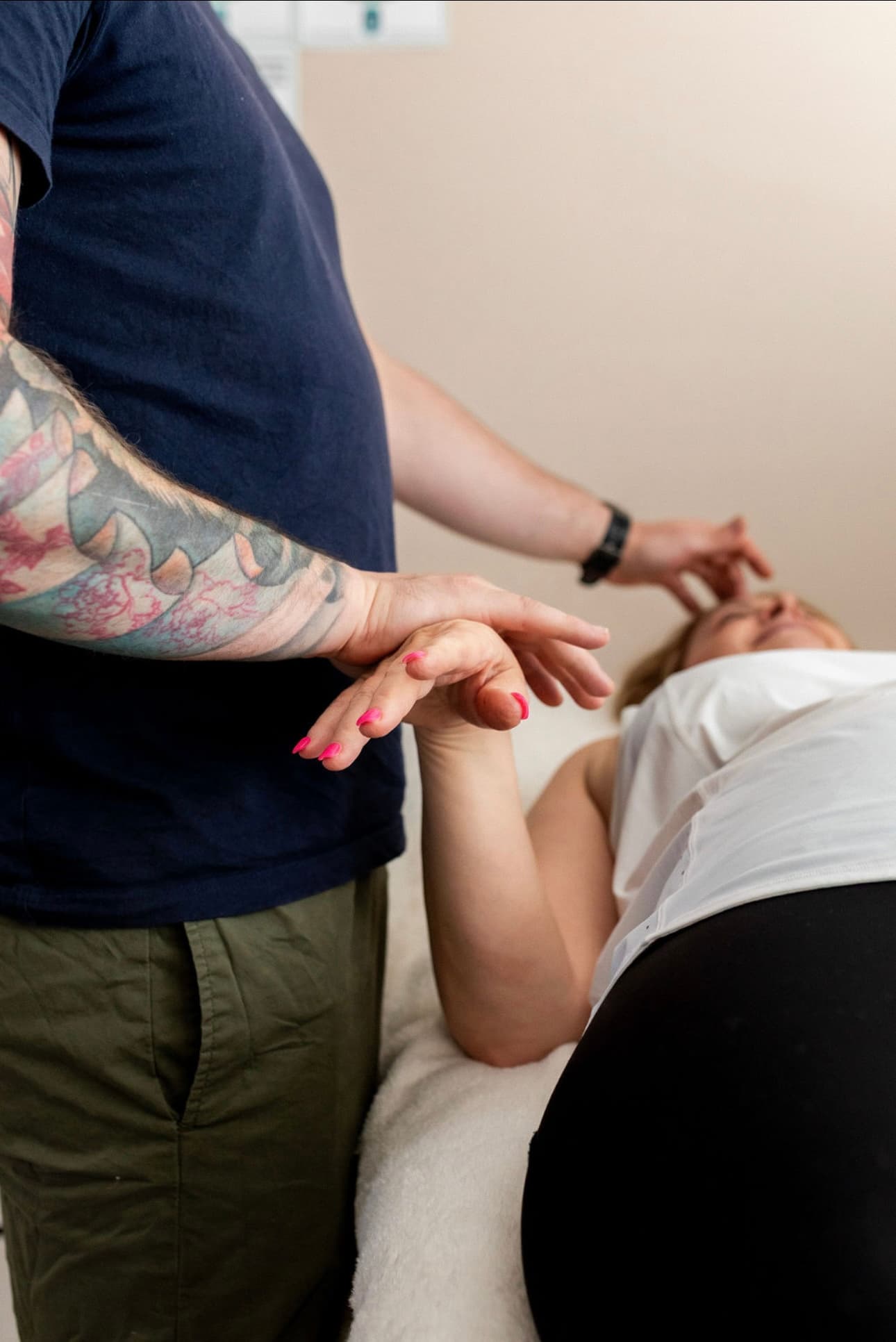
The nervous system does not respond to insight, it responds to safety.You can know exactly why you feel anxious and still feel anxious.PKP Kinesiology works at the level where the pattern lives, using muscle monitoring as a feedback tool to read what your body is holding and what it is ready to let go of.
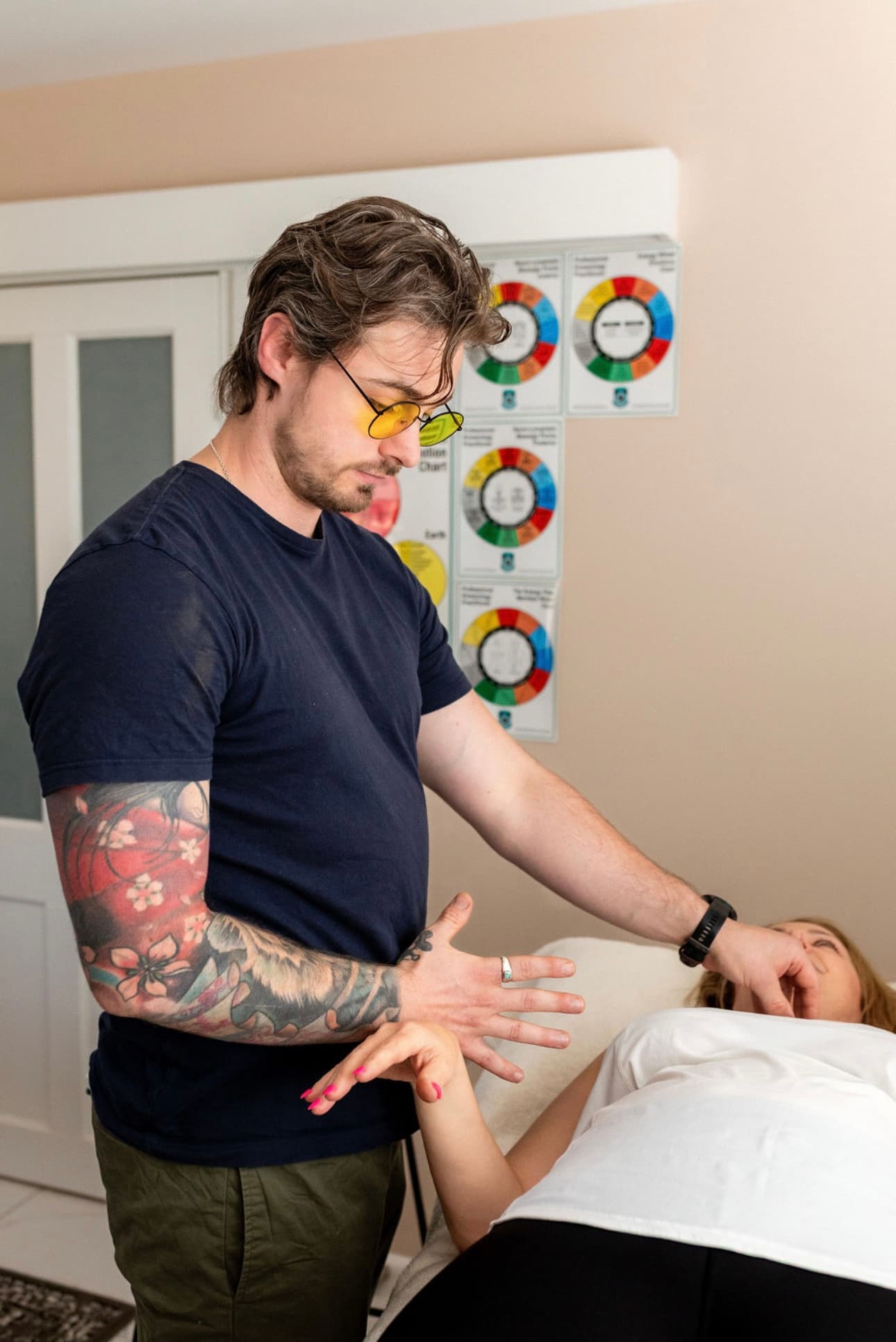
Gentle muscle monitoring reads where your body is holding the anxiety response.You stay fully clothed on a padded table, and you do not have to retell anything that set it off.
Targeted techniques help your body release the brace it has been holding, so the threat signal that has nothing to react to can finally stand down.
Session by session, your system learns it is safe to drop out of alert.The 3am loop loosens its grip. Longer-held anxiety takes more sessions. Results vary.
How It Compares
If anxiety is affecting your daily life, a psychologist or GP comes first. They can assess, diagnose and treat, and a kinesiologist can do none of those things. This work is for the body that stays braced after the thinking has already shifted.
| Talk therapy | Medical treatment | Kinesiology | |
|---|---|---|---|
| Works through | The thoughts, the story, the strategy | Brain chemistry, prescribed and monitored | The body, using muscle monitoring |
| Who provides it | A registered psychologist or counsellor | A GP or psychiatrist | A kinesiologist, unregistered |
| Can it diagnose? | Yes | Yes | No, and it never claims to |
| Best at | Understanding the pattern and changing how you respond | Conditions that need clinical treatment | A body still braced when the thinking has already shifted |
| See them when | Anxiety is affecting your daily life | A GP has assessed you and treatment is on the table | You want body-based support alongside the other two |
The diagnose row is the one that matters. Psychologists are university-trained, registered professionals delivering treatments with real evidence behind them, and that care is the front line, not a last resort. If you are already seeing someone, keep going. For the longer version, read kinesiologist vs psychologist.
What You Actually Get
One-on-one time with me, a muscle-monitoring read of where your body is holding the anxiety response, gentle work to help it settle, and a straight read on whether more sessions would help. Nothing needs to be relived, and there is no daily practice to keep up.
Costs are all on the pricing page, in full, with no extras added later.
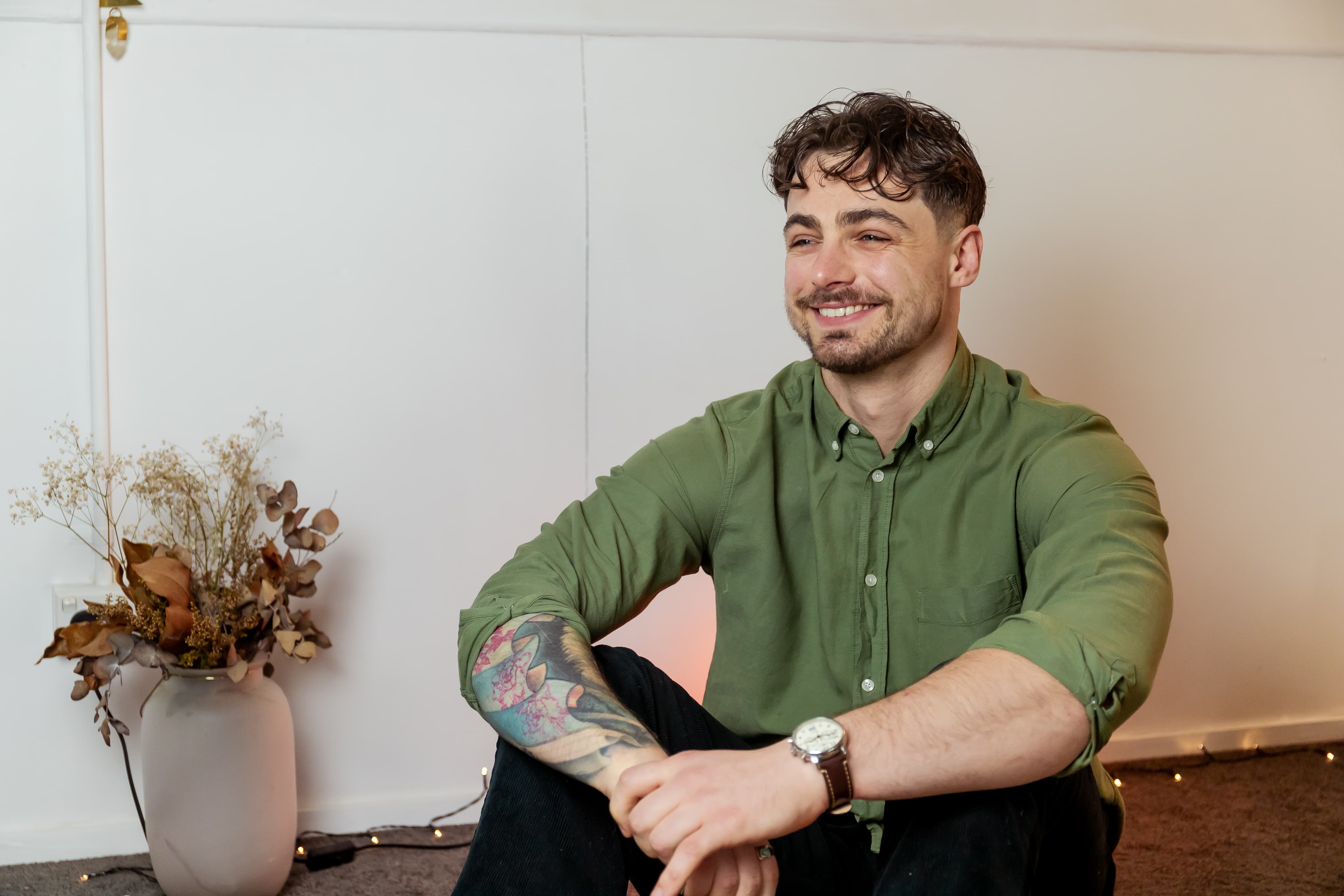
Trauma-informed PKP Kinesiologist. I work with people across Bayside Melbourne whose anxiety has not budged through talking or willpower alone. I do not follow a script, I follow what your body shows me.
The Intelligentle Method
The Intelligentle Method works with anxiety by meeting your body, emotions and nervous system at the same time, instead of only talking about what you are worried about. New to it? Read the full first-session walkthrough.
A focused 75 minutes to understand the anxiety you are carrying and how your body is holding it.
Muscle monitoring guides the work. We meet what your body shows us, at the pace it sets.
We shape the pathway forward so the change carries into how you live day to day, not just the session.
In person in Moorabbin or online across Australia.
As someone who’d tried everything for anxiety (therapy, medication, meditation), kinesiology with Vildan was the missing piece. He works at a level nothing else had reached.
Vildan is the best kinesiologist I have seen. He has help resolve my anxiety in both social situations and within my workplace. I am able to function in a much clearer capacity and I have Vildan to thank.
Vildan has an incredible ability to hold space without judgment. After just two sessions I noticed I was responding to stress differently, calmer, clearer, more grounded. Genuinely life-changing work.
I highly recommend booking in and having a few appointments with Vildan. He has helped me feel more grounded and secure.
I highly recommend Vildan and his work. Each session leaves me feeling calm and uplifted, with a renewed sense of optimism. His approach is both safe and insightful, creating a space that feels supportive for my growth.
He is a master at his craft, incredibly down to earth and highly intuitive. He listens and guides and creates a really safe space that you can explore yourself and what drives you. The session was powerful but light.
Frequently Asked Questions
Many people come to Intelligentle Healing in Moorabbin for anxiety, and clients commonly report feeling calmer and less reactive across a course of sessions. I’m Vildan Alihodzic, PKP Kinesiologist, and I use muscle monitoring to read where your body is holding the anxiety response, then work with gentle techniques to help it settle. Kinesiology works with the body rather than the thoughts, which is often why it can shift anxiety that has not budged through thinking-based approaches alone. Results vary. PKP Kinesiology is a complementary health modality and is not a substitute for medical advice.
Talk therapy works largely through the mind and the spoken narrative, and it does that well. PKP Kinesiology works through the body. It reads your nervous system for where anxiety is held and helps it down-regulate, with no requirement to talk anything through. At Intelligentle Healing, I use muscle monitoring as the feedback tool rather than conversation. It is a complement to talk therapy and psychology, never an alternative. If you are seeing a psychologist, keep going.
This is one of the most common reasons people book. When anxiety has no clear trigger, it is often a body braced for a threat that is not there, the wired-but-tired loop is a dysregulated nervous system, not a flaw in you. I use muscle monitoring to find where that pattern is held in the body, without needing a story or a reason behind it. You set the theme, and your body shows what it is ready to release. Results vary.
A first session at Intelligentle Healing in Moorabbin runs 75 minutes. I take a brief history of what you want to work on, then use muscle monitoring to identify where your body is carrying the anxiety. You lie fully clothed on a padded table. Sessions are calm and structured, and nothing needs to be verbalised or relived. Most people leave noticing a shift. Follow-up sessions are 60 minutes and build on what is already in motion.
There is no fixed number. Many clients notice a shift in their first session, and longer-held or lifelong anxiety typically takes more. Most people start with four to eight sessions and reassess from there. I give an honest read after your first session, so a single initial session is enough to tell whether the work is right for you. Results vary.
No. Kinesiology is a complement to psychological care and medical care, never a replacement for either. If you see a psychologist or GP, or you take medication for anxiety, keep doing so and keep them in the loop. At Intelligentle Healing, I work alongside that care, not instead of it. Intelligentle Healing is not an AHPRA-registered provider, and sessions are not a substitute for medical advice.
Generally no. Since the 2019 Australian private-health-insurance reforms removed kinesiology from natural-therapy rebates, it is usually not claimable on extras cover. Funds and policies differ, so the accurate step is to check directly with your health fund before booking. Intelligentle Healing does not promise coverage.
Book the 75-minute initial session with me, in Moorabbin or online across Australia. Not sure yet? The free 30-minute clarity call costs nothing and ends with an honest read on whether this is a fit, including when the answer is a psychologist.
Kinesiology is a complementary health practice and is not a registered health profession in Australia. Sessions are not a substitute for medical advice or treatment.