You understand it, and it hasn’t moved
You have talked it through, you can name the pattern and where it came from. The insight is real, and your body is still holding the same tension it held before you understood any of it.
Somatic (Body-Based) Sessions in Melbourne
Somatic means working with the body, and that is exactly where kinesiology works. For the stress and emotion that live under your skin rather than in your thoughts, when talking has taken you as far as it can, the next move is in the body.

When Talking Has Reached Its Ceiling
You cannot always think your way to the thing that is holding you. Body-based work exists because insight and emotion are not the same system. You can understand a pattern completely and still feel it running in your body. Three versions people describe most.
You have talked it through, you can name the pattern and where it came from. The insight is real, and your body is still holding the same tension it held before you understood any of it.
The tight chest, the clenched jaw, the gut that drops before your mind has caught up. The feeling arrives as a physical event, not a thought, which is why thinking about it differently rarely settles it.
A stress or a grief you never quite finished with, sitting under the surface. It leaks out sideways in reactions that feel bigger than the moment deserves. It was never filed away, just pressed down.
Who This Is For
This is for people carrying something the mind has already examined and the body still holds. Often the stuck, wired-but-tired feeling is a dysregulated nervous system, not a flaw in you. If insight has not shifted it, that is the signal this work is built for.
Emotional Release, Explained
Emotional release is the moment a feeling held in the body finally lets go. It is often felt as a wave of emotion, a deep involuntary exhale, tears, a shiver, or a settling lightness once it passes. The idea behind it is simple: strong stress and emotion are physical events, and when they are not fully processed at the time, the charge can stay held in the body and nervous system. Body-based work helps that stored charge discharge.
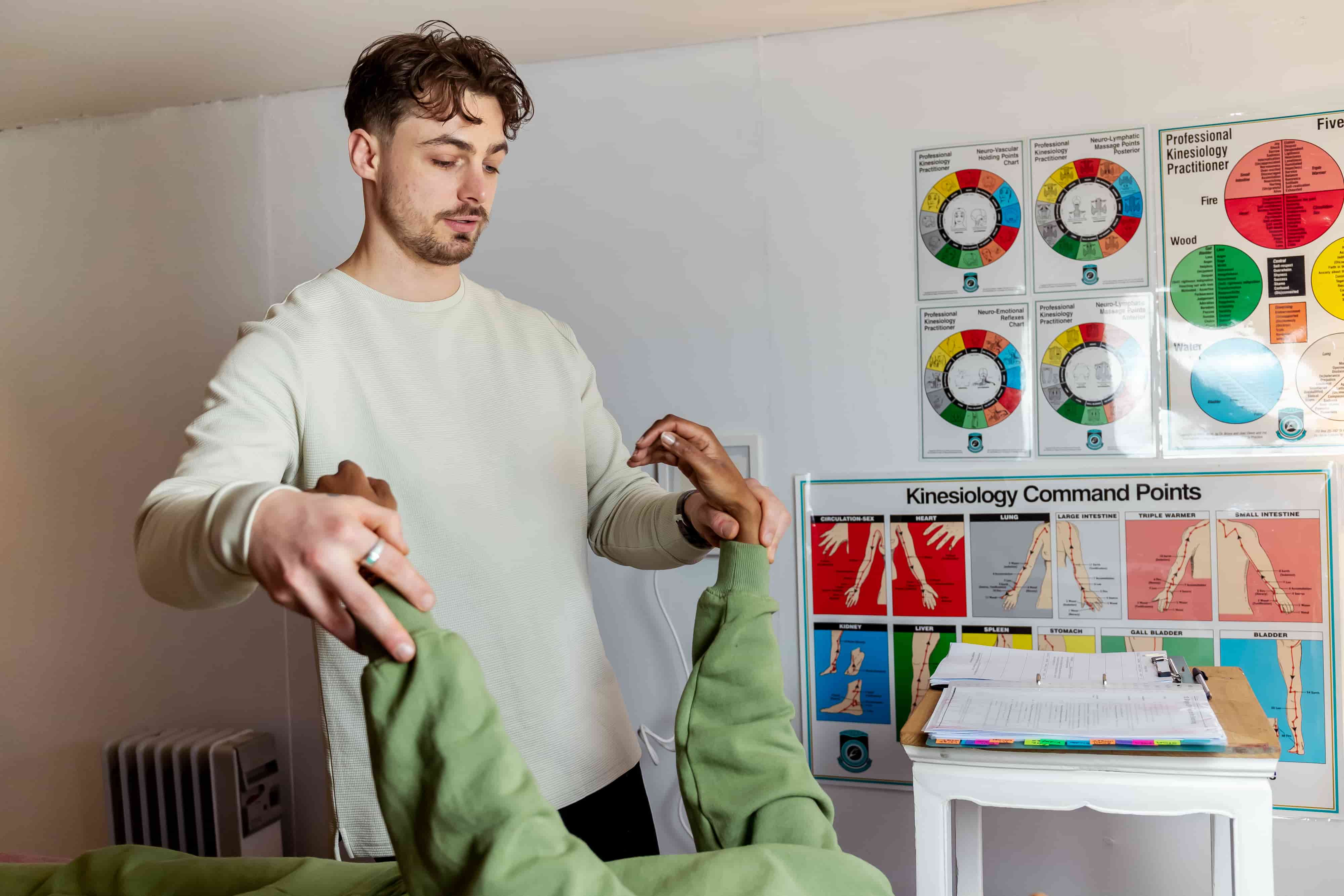
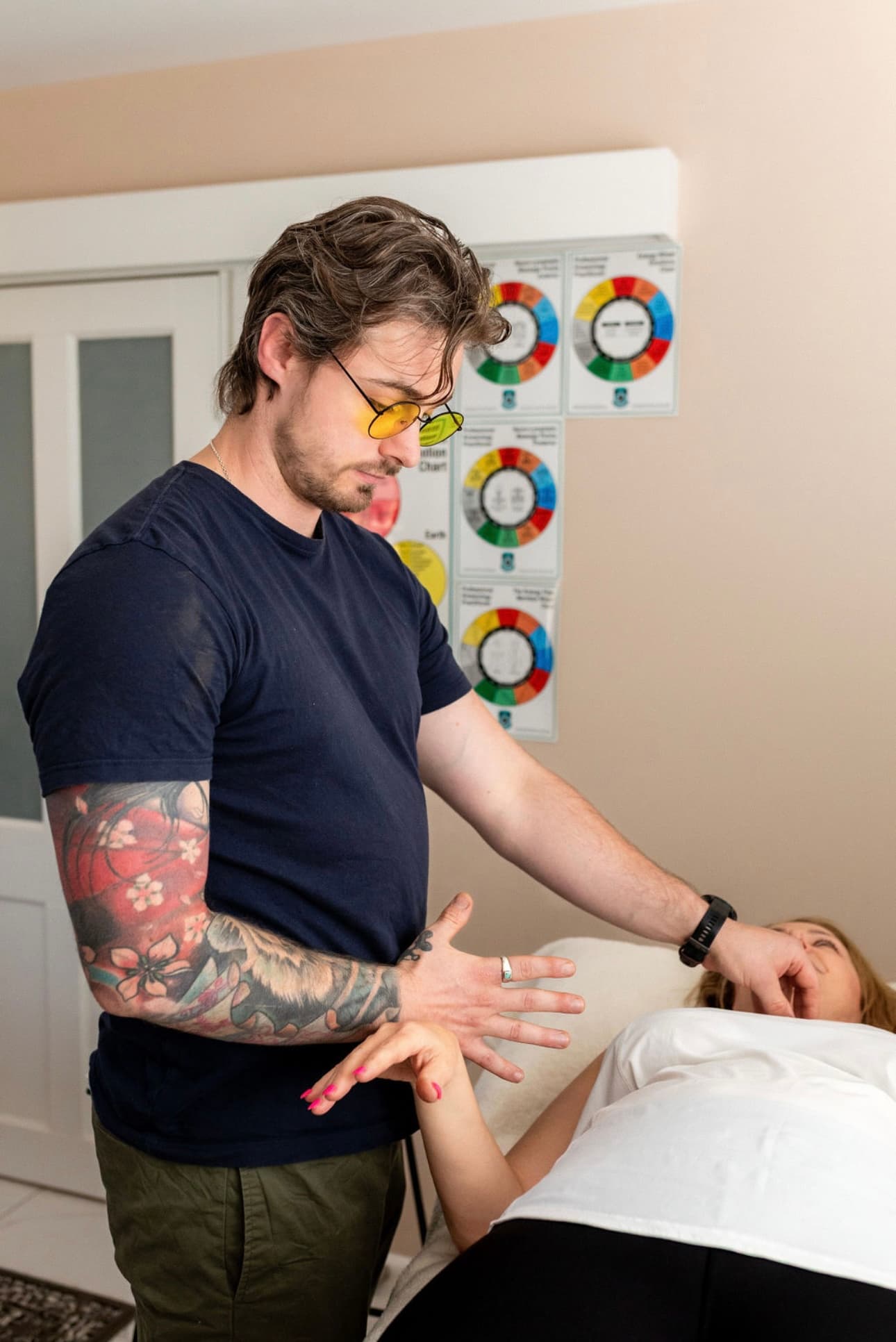
In a session, I use muscle monitoring to find where your body is holding the load and help it release gently, at the pace your system sets. It is not forced or theatrical, and it does not happen on a schedule. Some sessions bring a clear release, others are quieter and shift things underneath. This is complementary work that supports your body’s own regulation, not a treatment for any diagnosed condition. Results vary.
How Body-Based Kinesiology Helps
The body does not respond to insight, it responds to safety.You can understand exactly what you are carrying and still feel it held in your chest, your gut, your shoulders.PKP Kinesiology works at the level where it actually sits, using muscle monitoring as a feedback tool to read what your body is holding and what it is ready to let go of.
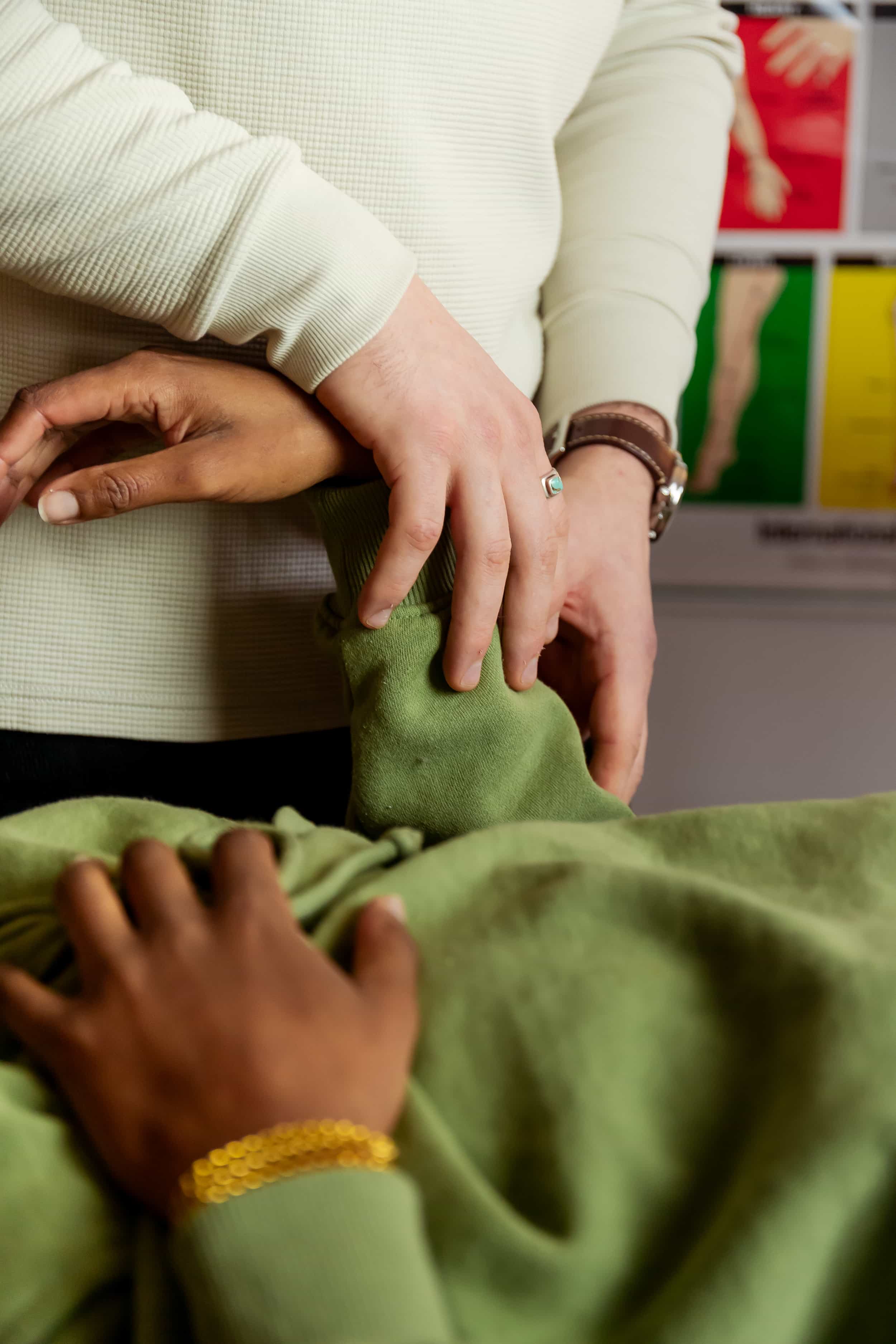
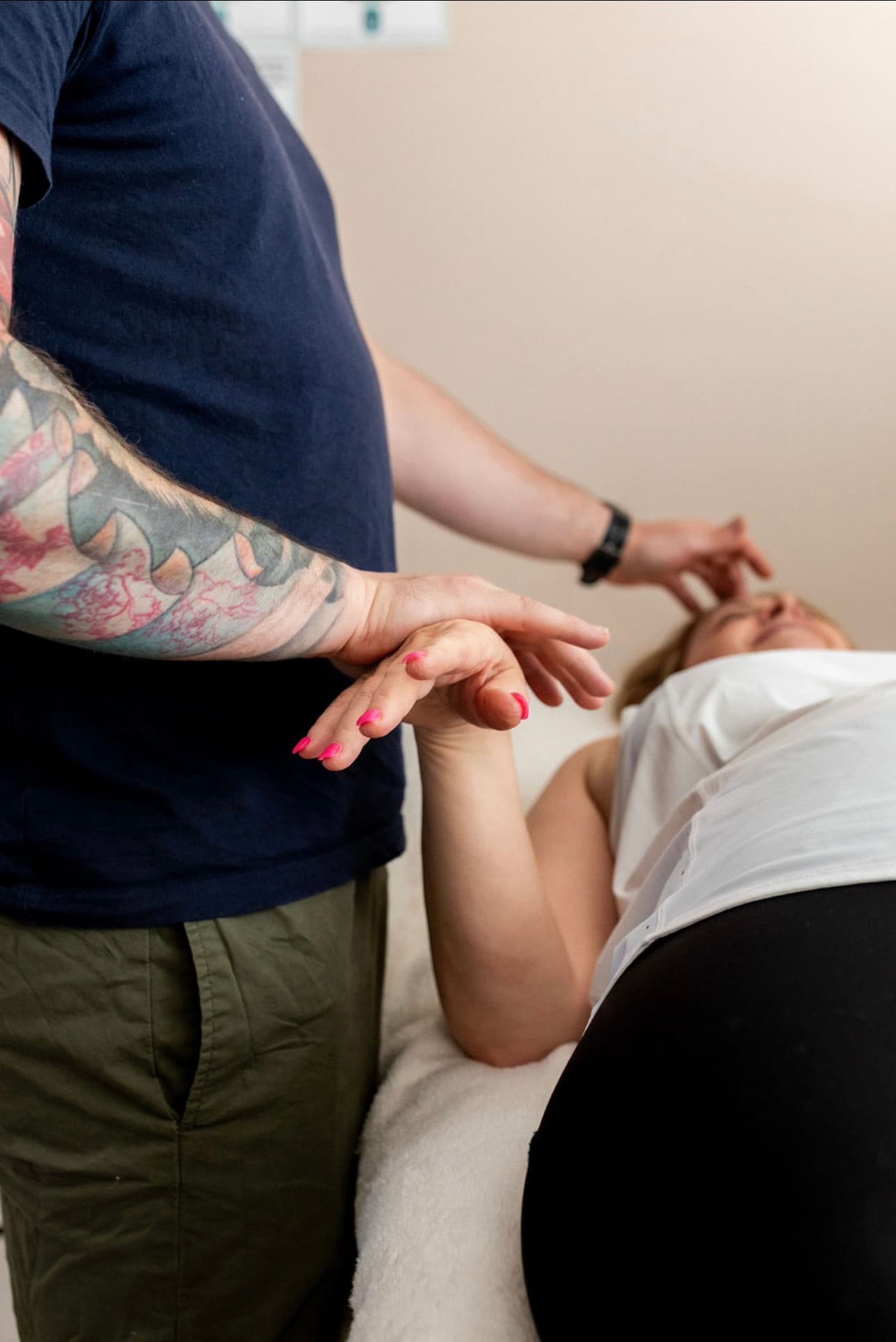
Gentle muscle monitoring reads where your body is holding stress or emotion.You stay fully clothed on a padded table, and nothing has to be retold or relived.
Targeted techniques help your body discharge the charge it has been holding, so a held feeling can finally move instead of sitting under the surface.
Session by session, your system learns it is safe to let go and stay settled.What felt stuck loosens. Deeper or older patterns take more sessions. Results vary.
How It Compares
Talk therapy works on the story and what you make of it. Body-based work goes at the nervous system directly, using muscle monitoring, with nothing that has to be retold. They are not rivals. Most people who book here are already doing one of them.
| Talk therapy | Body-based kinesiology | |
|---|---|---|
| Works through | The spoken story and the meaning you make of it | The body and the nervous system |
| You have to | Talk it through, sometimes more than once | Turn up. Nothing has to be retold or relived |
| The feedback tool | Conversation, reflection, the therapist’s read | Gentle muscle monitoring |
| Best at | Understanding a pattern and changing how you meet it | Discharging what the body is still holding |
| Who provides it | An AHPRA-registered psychologist or counsellor | A kinesiologist, unregistered |
| Can it diagnose? | Yes | No, and it never claims to |
The diagnose row is the honest one. A psychologist is a registered professional delivering treatments with evidence behind them; a kinesiologist is neither of those things. If you are seeing a therapist, keep going. This sits alongside that work, not in place of it.
What You Actually Get
One-on-one time with me, a muscle-monitoring read of where your body is holding stress or emotion, gentle work to help it discharge, and a straight read on whether more sessions would help. Nothing has to be retold, and nothing has to be relived.
Costs are all on the pricing page, in full, with no extras added later.
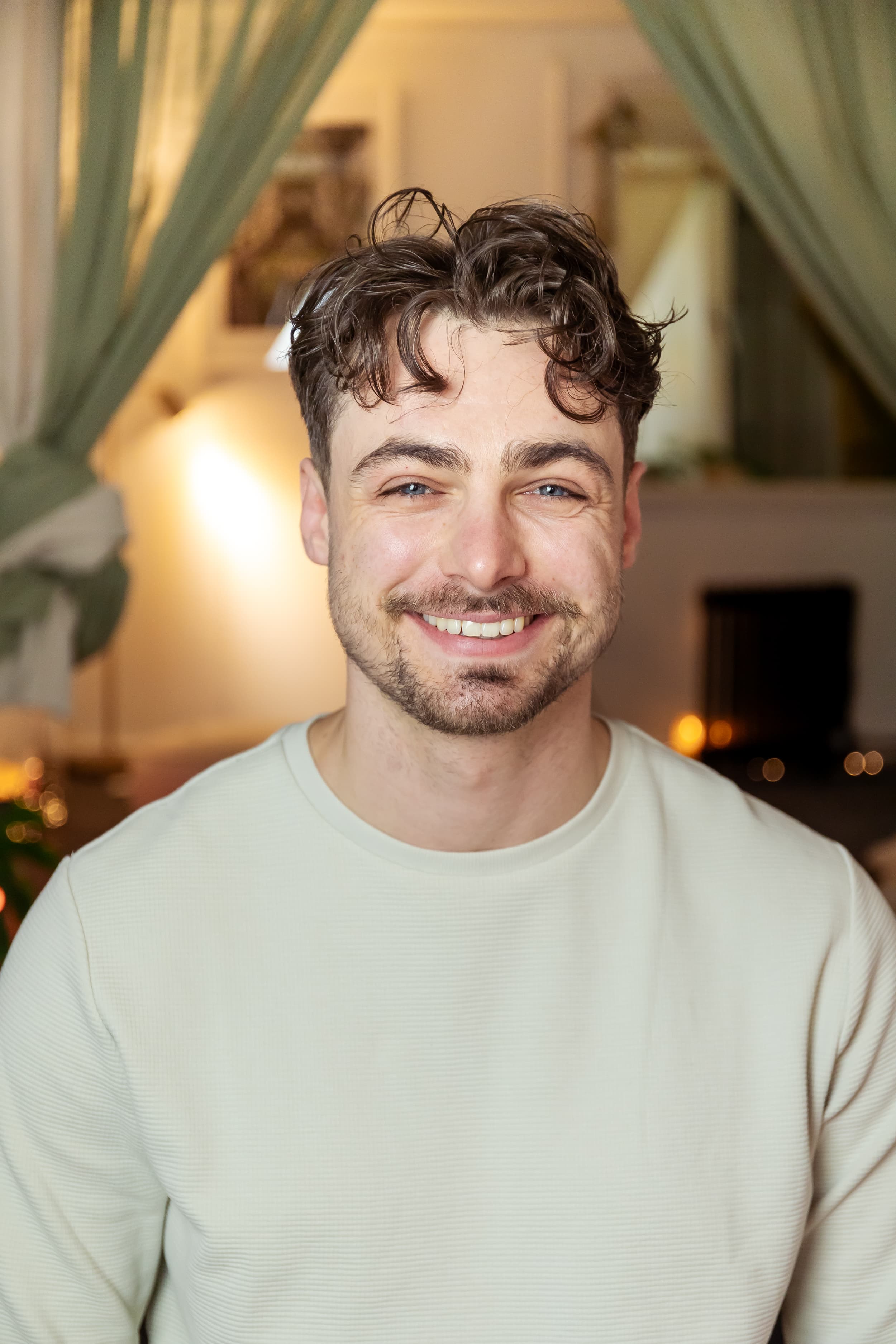
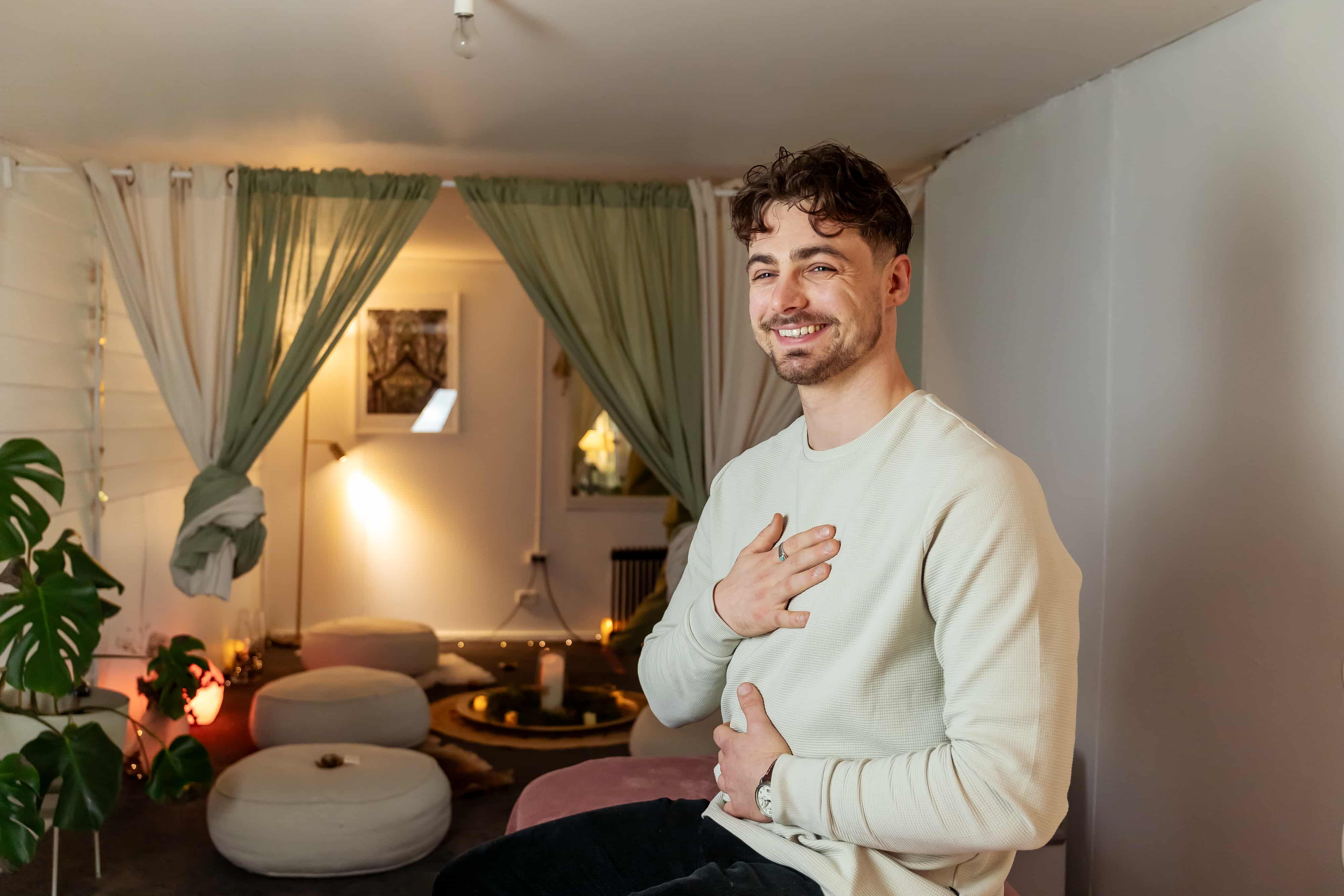
Trauma-informed PKP Kinesiologist. I work with people across Bayside Melbourne who want to work with the body rather than only talk about it. I do not follow a script, I follow what your body shows me, and I hold a safe space while it lets go.
The Intelligentle Method
The Intelligentle Method works with your body, emotions and nervous system at the same time, instead of only talking about what is wrong. New to it? Read the full first-session walkthrough.
A focused 75 minutes to understand what you are carrying and how your body is holding it.
Muscle monitoring guides the work. We meet what your body shows us, at the pace it sets.
We shape the pathway forward so the release holds and a calmer baseline carries into daily life.
In person in Moorabbin or online across Australia.
Initially, I felt completely drained after each session—a kind of exhaustion that seemed to come from releasing something deep within. But as that tiredness faded, I was left with an incredible sense of lightness, as if a weight I hadn’t realized I was carrying had been lifted.
With Vildan’s superb knowledge and skills, along with his warmth and genuine care, he helped me release trapped trauma, and blocks in the form of emotions that I was surrogating for people in my life.
I came in sceptical and left a believer. The session surfaced something I’d been carrying for years and just… moved it. I can’t fully explain it but I felt lighter for weeks afterwards.
I felt comfortable diving into some deeper traumas and felt I was able to process them further while feeling safe and free of judgment. I definitely noticed an extra spring in my step and felt more upbeat in the days following the session.
I have had many sessions with vildan and he has helped me through some extremely intense trauma and has done so much for my general well being I would recommend him to anyone looking to explore this healing space
He is a master at his craft, incredibly down to earth and highly intuitive. He listens and guides and creates a really safe space that you can explore yourself and what drives you. The session was powerful but light.
Frequently Asked Questions
Somatic simply means "of the body", and that describes kinesiology well. At Intelligentle Healing in Moorabbin, I’m Vildan Alihodzic, PKP Kinesiologist, and I work with stress and emotion where they are actually held, in the body and the nervous system, using gentle muscle monitoring rather than talking things through. It sits in the same body-based family as other somatic approaches. To be clear on titles: I’m a kinesiologist, not a registered psychologist or medical practitioner, and this is not Peter Levine’s trademarked Somatic Experiencing method. PKP Kinesiology is a complementary health practice and is not a substitute for medical advice.
Emotional release is what people describe when a feeling that has been held in the body finally lets go, often felt as a wave of emotion, a deep exhale, tears, or a sense of lightness afterwards. In a session, I use muscle monitoring to find where your body is holding that charge and help it discharge gently, at the pace your system sets. It is not dramatic or forced, and it does not happen to a schedule. Some sessions bring a clear release, others are quieter and settle things underneath. Results vary.
Talk therapy works mostly through the mind and the spoken story, and many people get real value from it. Body-based kinesiology works through the body. It reads the nervous system for where stress or emotion is held and help it release, with no requirement to talk anything through or relive it. At Intelligentle Healing, I see this as a complement to psychology and counselling, not a replacement. If you are seeing a therapist, keep going.
No. This is one of the main reasons people choose body-based work. You set the theme you want to work on, and muscle monitoring does the locating, so nothing has to be retold or relived out loud for the session to work. You stay fully clothed on a padded table, and sessions are calm and structured. For anything with a clinical trauma diagnosis, kinesiology works alongside your GP or psychologist, never instead of them.
A first session at Intelligentle Healing in Moorabbin runs 75 minutes. I take a brief history of what you want to work on, then use muscle monitoring to read where your body is holding stress or emotion and help it settle or release. You can read the full first-session walkthrough on the what-to-expect page. Follow-up sessions run 60 minutes and build on what is already in motion.
There is no fixed number. Many clients notice a shift in their first session, and patterns held for years usually take more. Most people start with four to eight sessions and reassess from there. I give an honest read after your first session, so a single initial session is enough to tell whether the work is right for you. Results vary.
No. Somatic kinesiology is a complement to psychological and medical care, never a replacement for either. If you see a psychologist or GP, or you take medication, keep doing so and keep them in the loop. At Intelligentle Healing, I work alongside that care. Intelligentle Healing is not an AHPRA-registered provider, and sessions are not a substitute for medical advice.
Book the 75-minute initial session with me, in Moorabbin or online across Australia. Not sure yet? The free 30-minute clarity call costs nothing and ends with an honest read on whether this is a fit.
Kinesiology is a complementary health practice and is not a registered health profession in Australia. Sessions are not a substitute for medical advice or treatment.