Quick Answer: Kinesiology uses gentle muscle monitoring as biofeedback to read stress patterns held in the nervous system. This guide is about Professional Kinesiology Practice (PKP), the body-led, trauma-informed branch practised at Intelligentle Healing in Moorabbin, Melbourne.
Search "what is kinesiology" and you get two completely different answers. One is a four-year university degree in sports science. The other is a hands-on therapy practised in clinics across Australia, including my PKP Kinesiology room at 229 Chesterville Road in Moorabbin.
This guide is about the second one. The body-mind variant. The one people end up Googling at 11pm after another bad sleep, another wired-but-tired day, another talk-therapy session that helped a bit but didn't quite reach the thing.
What is kinesiology, in plain English?
Kinesiology is the science of human movement, used in therapy to read what your body knows before your mind catches up. A practitioner applies light pressure to your arm and watches how the muscle responds while different stressors, emotions, foods, or memories are introduced one at a time. The Victorian Department of Health describes kinesiology as a complementary therapy that uses muscle monitoring to identify imbalances in the body's energy systems and nervous system.
In Australia, the word splits into two streams. Stream one is sports-science kinesiology, taught at universities like Victoria University, focused on biomechanics and exercise physiology. Stream two is therapy kinesiology, recognised by the Australian Kinesiology Association (AKA) and including variants like PKP, systematic kinesiology, counselling kinesiology, and Touch For Health. Stream two isn't regulated by AHPRA. Practitioners register with the AKA, which sets training, ethics, and continuing-education standards.
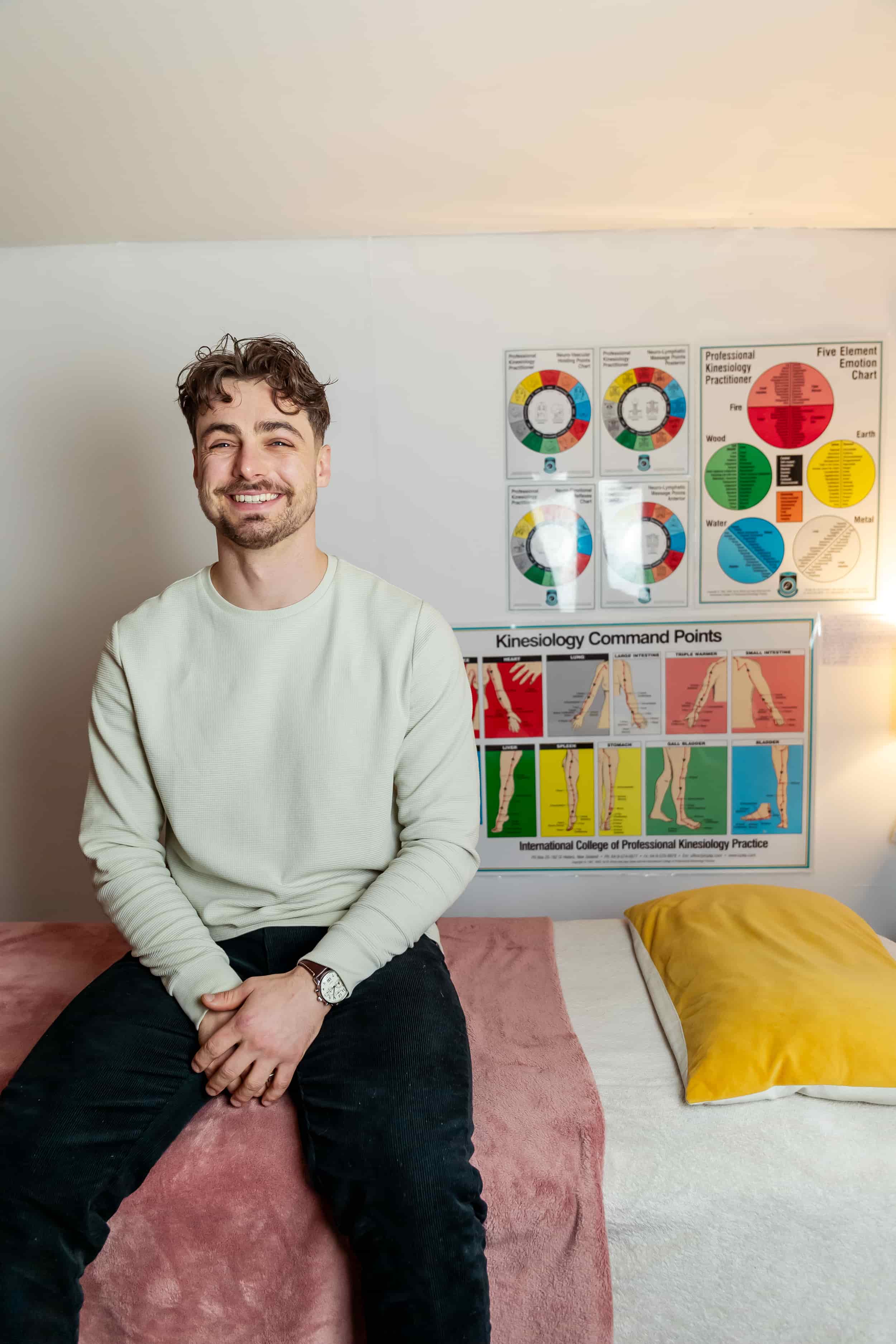
PKP, the variant practised at Intelligentle Healing, sits in stream two. Most people Googling at midnight want stream two. The rest of this guide is about that one.
What does the spiritual side of kinesiology actually mean?
Kinesiology takes seriously the idea that your body remembers things your mind has filed away or never had words for. That sounds spiritual because it partly is. It's also the practical premise behind every trauma-informed therapy practised in Australia today.
PKP was developed in New Zealand by Bruce and Joan Dewe in the 1980s, drawing on Touch For Health, Three In One Concepts, and meridian theory from Traditional Chinese Medicine. It's a protocol, not a freeform energy session. There's a defined sequence, a written record, and a goal you set at the start.
What makes it feel spiritual is the assumption underneath. PKP treats you as one whole system: body, emotions, mind, and the harder-to-name layer some traditions call life force, others call the nervous system. The College of Kinesiology frames this as body, mind, and spirit serving as complementary parts of one unified system. Working all four at once is rare in standard care, which usually splits you into specialities. That's why people carrying old stored stress often hit a wall in talk therapy before finding their way to PKP.
How does muscle monitoring open that conversation?
Muscle monitoring is biofeedback, not mind reading. Your nervous system processes information faster than your conscious mind does. Muscle monitoring reads a tiny slice of that subconscious processing in real time, the same way a lie detector reads sweat. The technique is documented in academic primers like Statistics in Kinesiology.
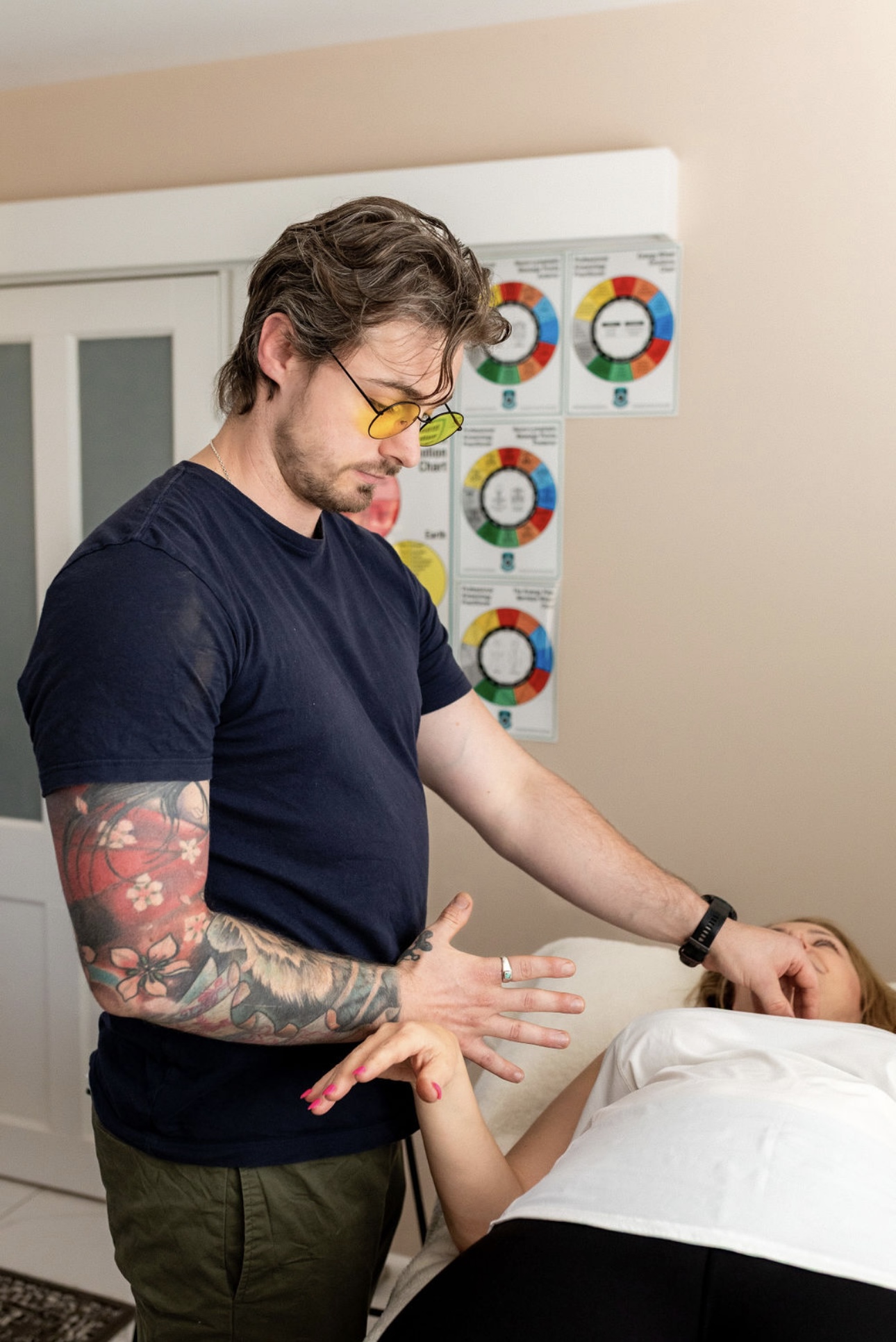
Here's what that looks like in practice. You lie clothed on a table. I extend your arm and apply gentle resistance, around 2 kg of pressure. I ask you to think of a situation, a person, a memory. The muscle either holds or softens. That binary response, plus the PKP protocol layered on top, gives me a way to track stress patterns and see which corrections shift them.
A 2022 peer-reviewed study on a kinesiology-led community programme showed measurable improvements in participant health. The therapy branch has weaker formal evidence than the sports-science branch. The Australian Government's 2024 Natural Therapies Review of kinesiology evidence acknowledges the same. I'll say it straight rather than dress it up: muscle monitoring is a feedback loop, not a magic act.
What happens in a kinesiology session?
A first PKP session runs 75 minutes, costs $270 AUD, and starts with a 20-minute conversation, not a treatment table. I ask what brought you in, what you've tried, what you want different. You set one specific goal for the session. Then you move to the table.
You stay fully clothed. Shoes come off. Your arm gets tested for a clear baseline. I cycle through the PKP protocol, working through emotional stress, structural patterns, nutrition, and energetic systems in a defined order. The corrections themselves are gentle: acupressure, eye-movement patterns, light tapping, breathwork, sometimes a vagus-nerve reset.
Before your first PKP Kinesiology session:
- Eat something light 1 hour beforehand
- Wear comfortable clothes you can move in (you stay clothed)
- Bring one written goal: what you want different
- Allow 30 minutes to integrate afterwards
- Skip alcohol and heavy caffeine that day
Where to find the kinesiology clinic in Moorabbin
Intelligentle Healing's clinic is at 229 Chesterville Road, Moorabbin VIC 3189, 20 minutes from Melbourne CBD by car and 5 minutes' walk from Moorabbin train station, with off-street parking. I work from this Bayside Melbourne location five days a week.
Clients drive in from across Bayside Melbourne (Brighton, Hampton, Sandringham, Bentleigh, Caulfield) and from the broader South East. Online sessions run Australia-wide for clients in Sydney, Brisbane, Perth, or remote regions, using a self-test variant of the protocol that holds up well over video.
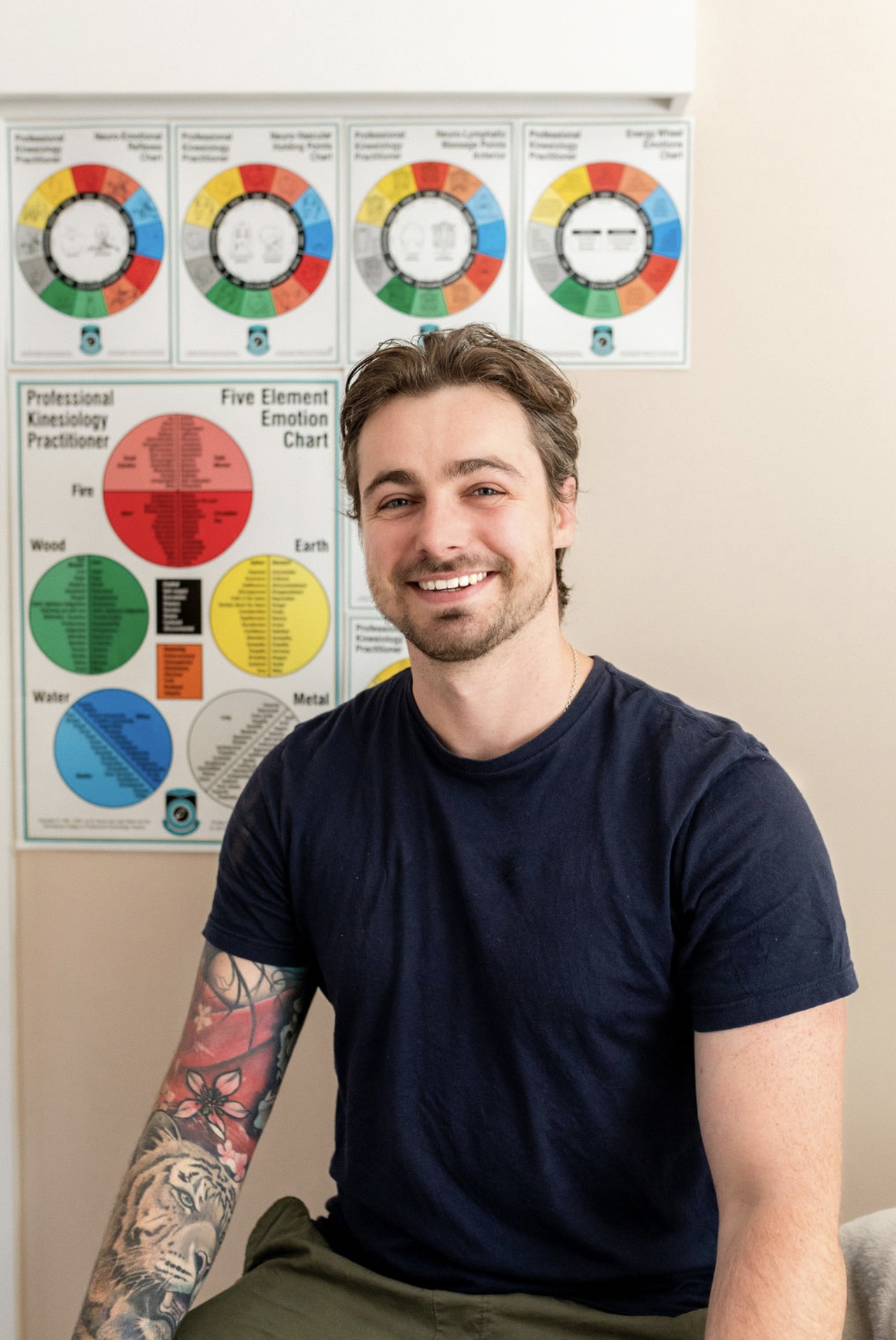
I'm a PKP Certified Kinesiologist and trauma-informed practitioner, registered with the Australian Kinesiology Association. I spent 18 months as the lead kinesiologist at a Melbourne holistic rehabilitation facility before founding the Moorabbin clinic, working with people in deep nervous system distress and complex stored stress.
Who does kinesiology actually help?
Across 42 five-star Google reviews and 18 months of clinical practice, the same pattern shows up: outwardly fine, internally braced. Most clients arrive after they've already tried something else. A psychologist for two years. A GP who suggested SSRIs. A meditation app that worked for a fortnight. They're not anti-medicine. They've just hit the ceiling of what willpower alone can solve.
The conditions kinesiology is most often booked for at Intelligentle Healing: anxiety, panic, chronic stress, executive burnout, broken sleep, emotional regulation, stored trauma, and the wired-but-tired fight-or-flight loop. I see the same constellation session after session: execs who can run a P&L but can't fall asleep before 1am. Lawyers whose shoulders have been locked since 2019. Parents present with the spreadsheet but blank with their kids. As the Harvard Business Review documents, more than 50% of managers report feeling burned out, a higher rate than employees broadly.
In my practice, clients often report the body shifting in ways thinking harder didn't. The line "I've done 12 months of shadow work in 2 hours" gets repeated in my reviews because the body-led method skips a layer of cognitive defence.
How does PKP kinesiology compare to talk therapy, reiki, and meds?
If you're weighing kinesiology against talk therapy, reiki, or antidepressants, here's the practical breakdown most articles skip. Each does something different, and "best" depends entirely on what's actually stuck.
| Modality | Primary mechanism | What a session feels like | Best suited to | Evidence base in AU |
|---|---|---|---|---|
| Talk therapy / CBT | Top-down cognitive reframing | Sitting and talking through patterns | Naming feelings, building insight | Strong, Medicare rebates |
| Reiki | Practitioner-directed energy work | Lying still, hands hovering | Deep nervous-system rest, release | Limited formal, complementary |
| Antidepressants | Pharmacological shift | Daily GP-managed medication | Severe depression, crisis stabilisation | Strong, moderate to severe cases |
| PKP Kinesiology | Bottom-up muscle biofeedback | Lying clothed, muscle tested, gentle corrections | Stored stress, burnout, body-mind gap | Limited formal, growing client data |
These aren't in competition. Plenty of clients run two of them in parallel and tell their GP, their psychologist, and me about each other. Kinesiology is also distinct from physiotherapy and chiropractic. Those modalities work primarily on structural mechanics, while PKP works on the body-mind feedback loop and stored stress.
When is kinesiology not the right call?
If you're in mental health crisis, in withdrawal, or managing a medical emergency, kinesiology isn't the first call to make. Call Lifeline (13 11 14), 000, or your GP. Kinesiology is complementary care, not crisis care, and any practitioner with integrity says so plainly.
It's also a poor fit if you want a Medicare-rebatable diagnosis on a measurable condition. For ADHD assessment, formal trauma diagnosis, or anything billable through a Mental Health Care Plan, you need a psychologist or psychiatrist first. PKP often runs alongside that work, after the diagnostic layer is in place, as the body-based partner to talk therapy.
One more honest disclaimer: it works best when you're ready to feel something shift. Book a session hoping a stranger will fix you without you doing the work, and the protocol reads that. The session goes slowly.
Frequently asked questions
Is kinesiology evidence-based? Partly. The sports-science branch is heavily researched, with thousands of peer-reviewed studies on biomechanics and exercise physiology. The complementary-therapy branch, PKP included, has limited formal randomised-controlled-trial evidence, which the Victorian government's Better Health channel acknowledges openly. It does have substantial practitioner-recorded and client-reported outcome data. Most clients book because someone they trust noticed a real change, not because of a trial.
Does kinesiology hurt or feel weird? No. You stay fully clothed, lie on a treatment table, and the practitioner applies gentle pressure to your arm, around 2 kg, comparable to a firm handshake. The corrections themselves are light: acupressure, eye movements, breath patterns, sometimes a light tap. The strangest part is realising your arm gives way to questions your brain hasn't consciously answered yet. That part lands differently for everyone.
How is PKP kinesiology different from the applied kinesiology a chiropractor does? Applied Kinesiology (AK) is the chiropractic variant, used inside a structural diagnosis frame. PKP (Professional Kinesiology Practice) is a separate lineage developed in New Zealand, focused on body-mind protocols, emotional stress release, and goal-led work rather than structural correction. They share the muscle-testing technique. The philosophy is genuinely different.
What is the difference between kinesiology and reiki? Reiki and kinesiology are both gentle and hands-on, and both get filed under energy work, but they do different jobs. Reiki is the practitioner channelling energy to you while you rest. Kinesiology is a two-way feedback loop: muscle monitoring lets your body answer questions, then the practitioner works to specific findings. Reiki suits deep rest and release. Kinesiology suits people who want to know what's actually driving the pattern.
How many kinesiology sessions until I notice a change? Most clients notice something shift after the first session, even if it's just sleeping more deeply that night or feeling less braced. A measurable lasting change in a chronic pattern, broken sleep, persistent anxiety, executive burnout, usually takes 4 to 8 sessions across 8 to 12 weeks. My average client books 6. Acute one-off stress responses can move in 1 to 2 sessions.
Can I claim kinesiology on Medicare or private health insurance? Medicare doesn't cover kinesiology. Some private health funds offer rebates under "natural therapies" or "complementary therapies", typically $30 to $50 per session, depending on your level of cover and the fund. Bupa, HCF, and AHM have offered rebates historically. The fastest way to check is to call your fund with the practitioner's provider number, which I supply on request.
Is kinesiology the same as a massage or a chiropractic adjustment? No. Kinesiology is non-manipulative. There's no spinal adjustment, no deep tissue work, no joint cracking. You stay clothed, on the table, and the practitioner reads muscle responses rather than working on tissue. The closest comparison is acupuncture without needles, plus a structured emotional-stress-release protocol layered on top. The mechanism of action is informational, not mechanical.
Ready to find out what your body has been holding?
A first PKP Kinesiology session at the Moorabbin clinic is 75 minutes, $270 AUD, and a real way to test whether this method lands for you. Online sessions run Australia-wide for clients outside Melbourne, with a self-test variant of the protocol that holds up well over video. If you want a lower-commitment first step, book a free 15-minute call to ask me whatever you need to ask before you commit. No script, no pressure, no obligation to follow up.
The Harvard Business Review's broader work on chronic burnout makes the case that resting isn't the answer when the system itself has stayed switched on. The harder pattern is convincing your nervous system the threat has passed. Body-led work is one practical way to start that conversation. Book a session in Moorabbin or read my full story first.